
Europe Picks Five-Nation Team for Ukraine Peace Talks as Kremlin Sets Conditions
By DunyaDesk · 2026-11-14
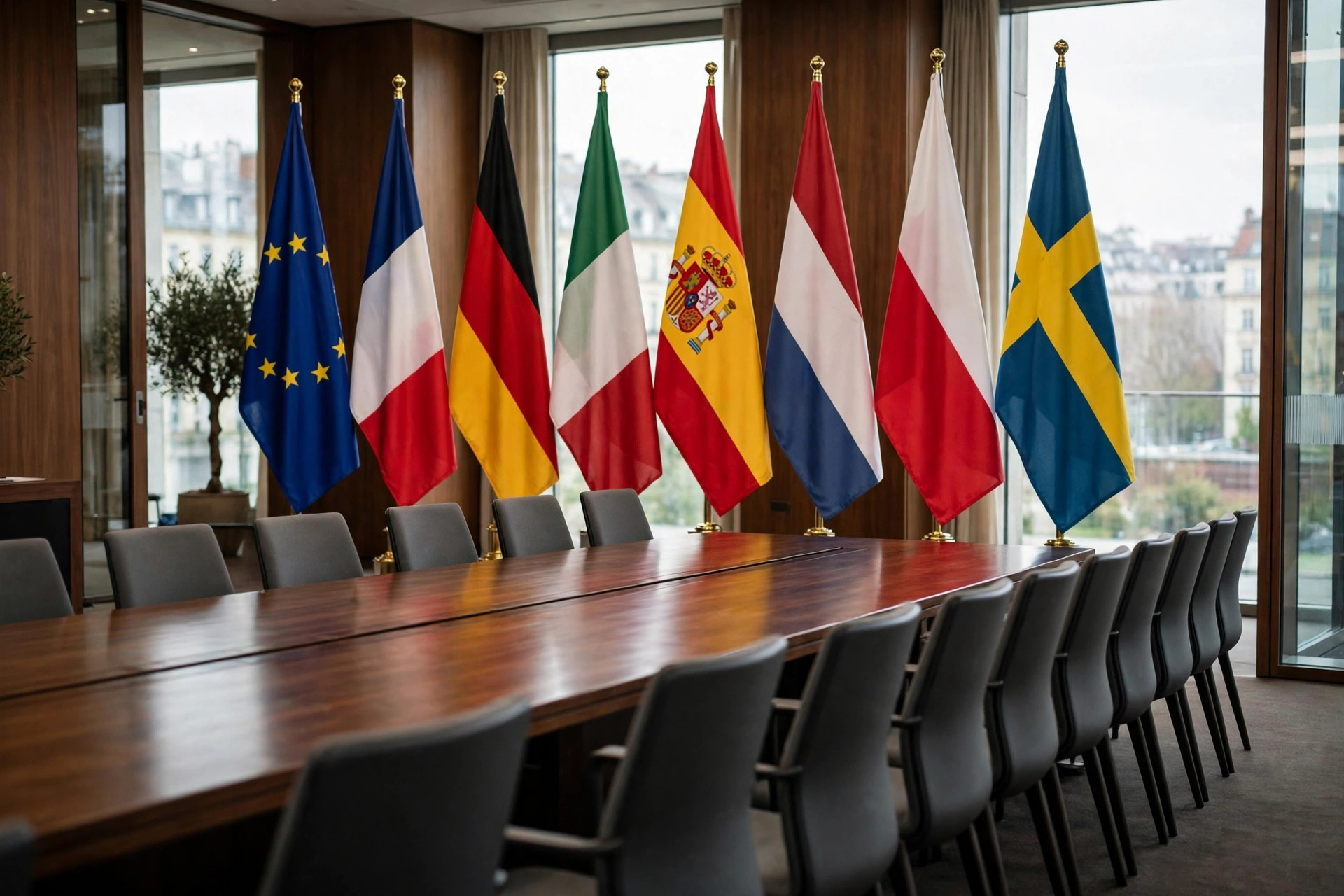
Ukraine peace talks are set to include a European delegation for the first time, after European leaders agreed in Dublin on Friday that the continent will be represented by officials from the European Union and five individual countries. But the Kremlin has not yet confirmed that it will accept Europeans at the negotiating table, saying it first wants to understand whether they genuinely intend to contribute to peace.
European Council President Antonio Costa announced the decision after an informal meeting of EU leaders in Dublin, Ireland. "Europe must speak with one clear voice and united voice in all discussions that shape the future of Ukraine and the security of our continent. And this is ultimately a team effort," Costa told a news conference, Al Jazeera reported.
Ukraine Peace Talks: Who Is on Europe's Team
The European team will consist of the 27-nation EU bloc's institutions and five members of the "Coalition of the Willing" that backs Ukraine: the United Kingdom, France, Germany, Italy and Poland, Costa said. The five are known within the coalition as the E5.
Reuters reported that the representatives for Europe in future talks were likely to be national security advisers from the five military powers, plus delegates from the European Commission and the European Council. NATO is also likely to participate, according to the same report.
The decision ends months of uncertainty inside Europe over who would speak for the continent, after European governments worried that US-backed negotiations between Moscow and Washington could leave them sidelined and Kyiv vulnerable.
How the Week of Diplomacy Unfolded
The breakthrough followed two days of US-mediated trilateral talks in Abu Dhabi this week — the first direct US-mediated negotiations between Russia and Ukraine in nine months. US envoys Steve Witkoff and Jared Kushner then held more than four hours of talks with Russian President Vladimir Putin in the Kremlin on Thursday, before flying to Dublin to brief Ukrainian President Volodymyr Zelenskyy.
After the Moscow meeting, Witkoff told Russian state television that the Europeans would join the next meeting, calling it "a very important moment because they are our partners". Kushner wrote on X that "both sides have now agreed to expand the next round of negotiations to include our European partners".
Zelenskyy welcomed the prospect of European participation, saying Europeans would take part rather than remain separate from the process. The main concrete outcome of the Abu Dhabi talks, however, was agreement on what could become the war's largest prisoner exchange, potentially involving thousands of people. Neither side has announced a number, a date or how the exchange would work.
The Kremlin's Conditions
Moscow's response has been far cooler than Washington's announcement suggested. Kremlin aide Yuri Ushakov did not confirm that the Europeans would join the next round, and spokesman Dmitry Peskov said on Friday that no decision had been made.
"Once we understand their actual intentions and their willingness to contribute to the peace process, then we can make a decision regarding a dialogue in an expanded format," Peskov told reporters. "Putin has never refused to engage with the Europeans," he added. "If the Europeans truly have someone who is authorized to hold discussions... then, of course, we would be prepared to talk with them."
CNN reported that Russia remained evasive on Friday after the US negotiators said European delegates would join the next round — neither explicitly endorsing a European delegation nor flatly rejecting it.
What Is Still Unresolved
No date or location has been announced for the next round of talks, and the parties remain far apart on the substance. Reuters and the Associated Press reported that Russia and Ukraine remain divided on territory and on the security guarantees Kyiv says it requires, meaning the commitment to a broader format is not an agreement to end the war.
European leaders are expected to discuss Ukraine's financing needs for 2027 and beyond at their next European Council meeting on November 26–27, the Kyiv Independent reported. For now, Europe has secured what it spent months seeking — a named seat at the table. Whether Moscow lets it sit down remains an open question.
Sources: Al Jazeera, 13 Nov 2026; Reuters, 13 Nov 2026; CNN, 13 Nov 2026; Kyiv Independent, 13 Nov 2026; Business Standard, 14 Nov 2026; The Straits Times, 13 Nov 2026.
Comments
No comments yet. Be the first to share your view.