
France Protests: 600,000 March Nationwide as Cost-of-Living Unrest Hits New Peak
By DunyaDesk · 2026-11-06
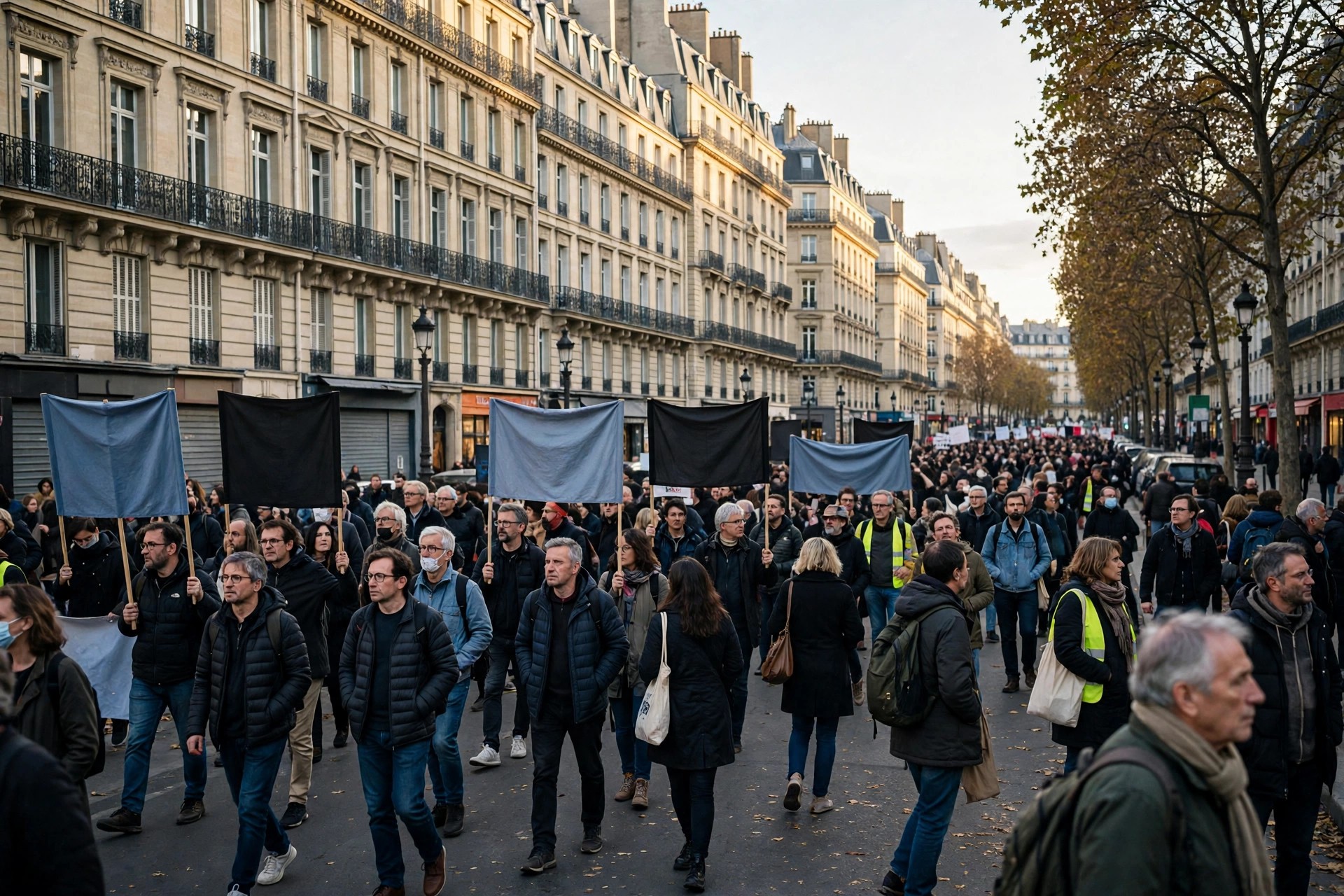
Hundreds of thousands of people marched across France on Thursday in the biggest day of "France protests" since the cost-of-living movement began — unions, teachers, students and public workers filled streets in about 260 towns and cities, demanding higher wages and an end to cuts in public services. The government put the turnout at more than 600,000, while unions claimed nearly 1.6 million — both counts higher than the previous peak on October 17.
How Big Was the Turnout
France's Interior Ministry first estimated nearly 600,000 demonstrators nationwide, later revising its 6pm tally to 575,000, including 65,000 in Paris. The CGT union, one of the organisers, put the nationwide figure at nearly 1.6 million, with 350,000 in the capital. Both counts made Thursday the largest day of demonstrations this autumn, above the 550,000 recorded on October 17. The two tallies are reported separately — official and union counts in France routinely differ, and neither is presented here as the single figure.
Arrests and Injuries
French authorities reported 448 arrests and 53 injured police officers by Thursday evening, with 86 fire incidents recorded across the country. In Lyon, local authorities reported 40 injuries, including 34 among police officers, and 24 arrests. Around 70,000 police officers and gendarmes were deployed nationwide to manage the mobilisation. Marches were largely peaceful, though clashes were reported in Paris, Lyon, Bordeaux, Nantes, Rennes, Toulouse and Marseille.
What the Protesters Want
The movement began in September around overcrowded high schools, teacher shortages and university admissions, and has widened into a broader fight over wages, prices and public services. Unions are pressing for a rise in the national minimum wage — currently €12.31 an hour — and across-the-board pay increases. The CGT is seeking a 10 percent rise in the minimum wage, while the more moderate CFDT wants an additional €100 a month in take-home pay. Students, teachers, hospital staff and railway workers joined Thursday's action.
Disruption Across the Country
The one-day strike disrupted schools and universities: the Education Ministry said nearly 16 percent of teachers were on strike, and the Higher Education Ministry reported disruptions at 60 of 184 institutions. The Eiffel Tower was shut for the day. Most high-speed trains operated normally, according to railway operator SNCF, but regional and Paris commuter services suffered substantial disruption.
Government Response: Wage Talks on Monday
Prime Minister Sébastien Lecornu announced a "social conference" with trade unions and employers' organisations at Matignon on Monday, November 9, to discuss wages and the cost of living. The government statement framed the meeting as a response to workers' demands. CGT Secretary-General Sophie Binet called the strike "extremely effective" and urged the government to answer the demands. Yellow-vest groups have called for further blockades and protests on Friday and Saturday.
Why It Matters
The unrest comes five months before a presidential election that President Emmanuel Macron cannot contest, and it puts pressure on Lecornu's government ahead of Monday's talks. The protests are the strongest show of force yet in a wave that began in classrooms and has grown into a nationwide cost-of-living confrontation — and the outcome of the wage talks will shape whether the movement escalates or eases.
Source: The Express Tribune (Anadolu Agency), Firstpost (AP), Astro Awani, AJP (Korea JoongAng Daily)
Comments
No comments yet. Be the first to share your view.