
Hunza Valley: Attabad Lake, Baltit Fort and the Most Beautiful Places in Pakistan's North
By DunyaDesk · 2026-11-11
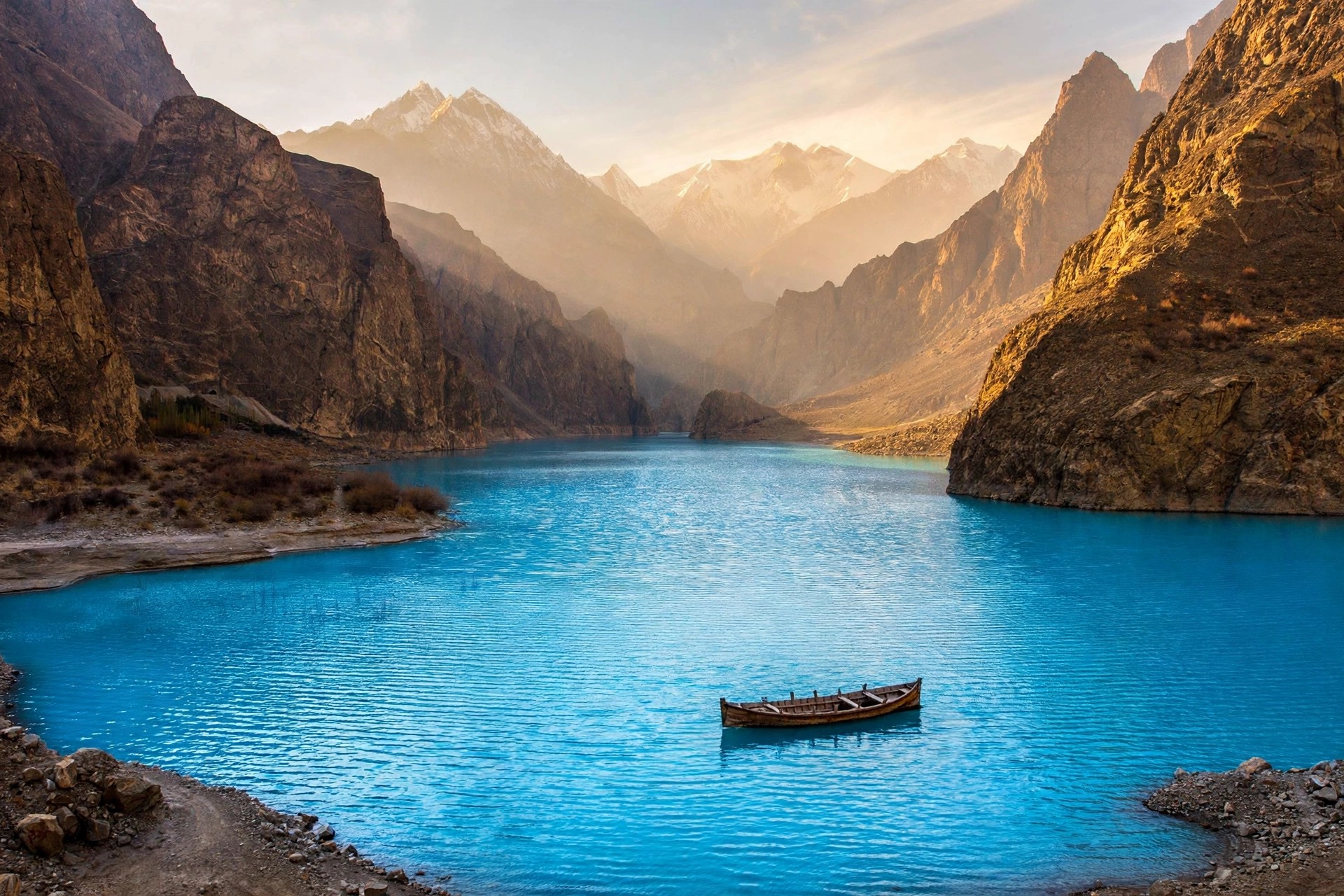
Hunza Valley Pakistan is the valley that makes travellers cancel their flight home. Tucked between the Karakoram peaks in Gilgit-Baltistan, it packs turquoise lakes, thousand-year-old forts, apricot orchards and some of the highest mountains on earth into one compact valley — and it is, by most accounts, the most beautiful place to visit in Pakistan. From Attabad Lake to Baltit Fort, here are the places that make Hunza unforgettable.
Attabad Lake: The Turquoise Lake Born from a Landslide
Attabad Lake is the icon of Hunza and the first stop on almost every Hunza Valley tour. The lake was formed in January 2010, when a massive landslide buried the village of Attabad and dammed the Hunza River. Today it stretches for more than 20 kilometres of impossibly turquoise water between steep cliffs, and visitors cross it by boat. Five tunnels cut through the cliffs above it carry the Karakoram Highway onwards towards the Chinese border.
Baltit Fort and Altit Fort: A Thousand Years Above Karimabad
Karimabad, the main town of Hunza, sits at around 2,500 metres above the Hunza River, and above it stand two forts that once housed the Mirs of Hunza. Baltit Fort, the valley's most photographed building, was the Mir's palace for some 700 years before it was abandoned in 1945; restored by the Aga Khan Trust for Culture, it won a UNESCO Asia-Pacific Heritage Award in 2004, and its top floor looks out over the whole valley. Altit Fort is older still — dating to the 11th century, it is the oldest continuously inhabited fort in Gilgit-Baltistan — and its terraced Royal Garden turns pink and white with apricot blossom in spring.
Passu Cones and the Hussaini Suspension Bridge
In Upper Hunza, the six shark-fin spires of the Passu Cones rise above Passu village and are among the most photographed mountains on earth; a short walk takes you to their base. Nearby, the Hussaini Suspension Bridge — a long, swaying crossing of wooden planks over the Hunza River between the villages of Hussaini and Zarabad — is one of the valley's most famous and nerve-wracking experiences. The quiet village of Gulmit, the heart of Upper Hunza, sits between the two, surrounded by apricot orchards and old Wakhi houses.
Eagle's Nest Sunrise and Khunjerab Pass
For the finest sunrise in Hunza, visitors climb to Eagle's Nest at Duikar before dawn, where the face of Rakaposhi — at 7,788 metres one of the world's highest peaks — lights up orange before the valley wakes. From Karimabad, a day trip climbs the Karakoram Highway to Khunjerab Pass, at about 4,693 metres the world's highest paved international border crossing, where Pakistan meets China. It is snow-leopard and Marco Polo sheep country, and the road is seasonal — guides advise checking conditions before travelling, as landslides closed the Sost–Khunjerab road in September 2026.
When to Visit Hunza Valley
The best time to visit Hunza Valley is between April and October, with May to September the most reliable months for clear roads and open passes. Late March to mid-April brings the cherry and apricot blossom, when the valley turns pink and white and hotels fill fast. Most visitors spend three or four days based in Karimabad and leave wishing they had stayed longer — the side valleys of Passu, Gulmit, Shimshal and Nagar could fill a month on their own.
Sources: Tripmaker, VacayAdviser, House of Pakistan, Gilgit-Baltistan Guide, Musafir in Transit
Comments
No comments yet. Be the first to share your view.