
Hunza Valley Pakistan: Attabad Lake, Baltit Fort and Khunjerab Pass in the Karakoram
By DunyaDesk · 2026-11-12
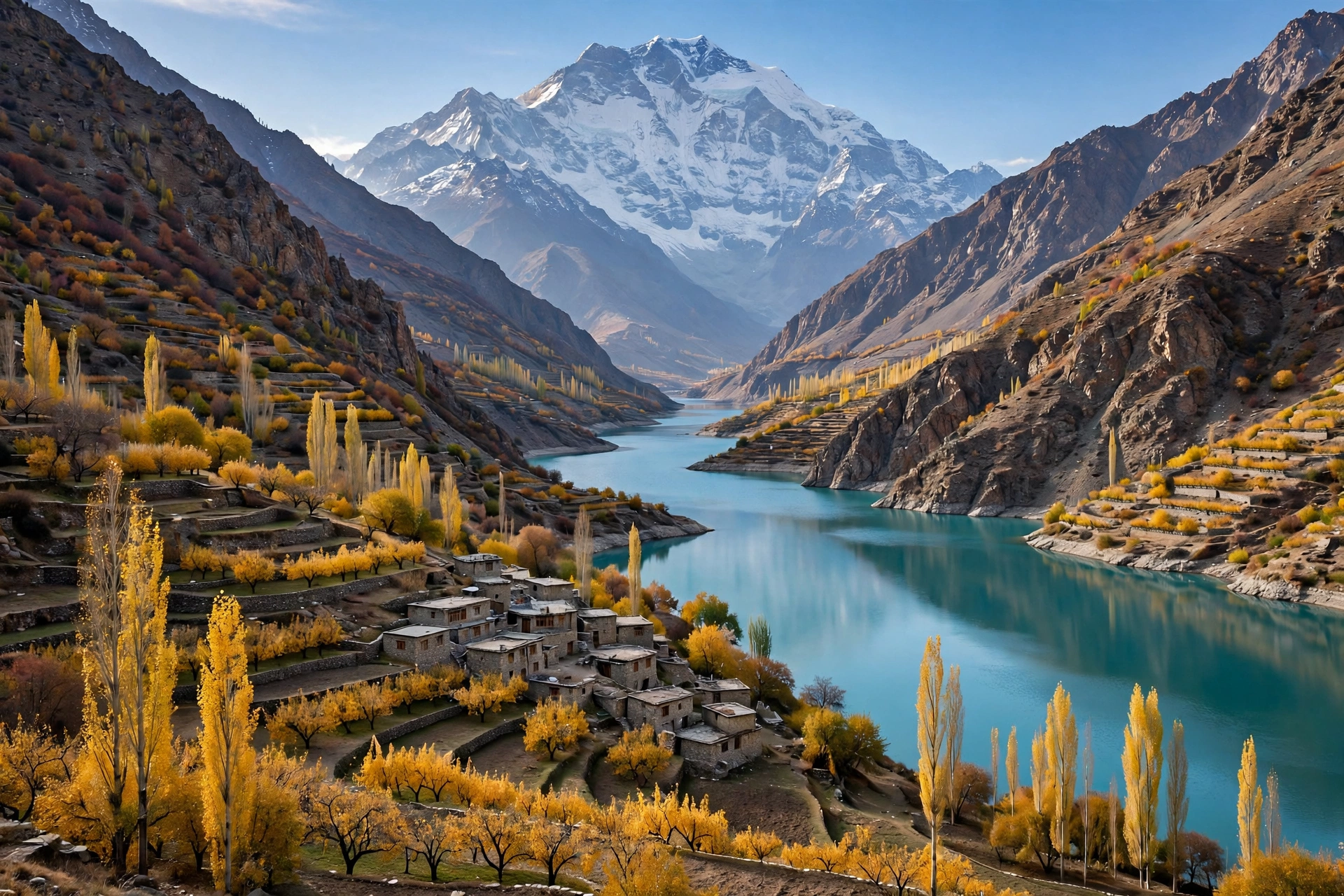
Hunza Valley Pakistan sits in Gilgit-Baltistan, in the far north of the country, along the Karakoram Highway — and it is the trip most people in Pakistan dream about first. In one valley you get Rakaposhi and Ultar peaks looking down on apricot orchards, 700-year-old forts, a turquoise lake that did not exist before 2010, and a highway that climbs to the Chinese border at 4,693 metres. The main town most visitors stay in is Karimabad, perched on a slope at around 2,500 metres with Rakaposhi filling the view.
Hunza Valley Pakistan: Attabad Lake, the Lake That Did Not Exist Before 2010
Attabad Lake is the valley's signature sight — and the youngest. In January 2010 a massive landslide at Attabad village blocked the Hunza River, submerging villages and a long stretch of the Karakoram Highway. What it left behind is a roughly twenty-kilometre lake of turquoise water, now the most photographed water in the country. Boating, jet skis and lakeside cafes have grown up along the shore, and the rebuilt highway now runs above it through a series of tunnels. From the lake, the drive continues to the jagged Passu Cones and the famously wobbly Hussaini suspension bridge, with a quiet stop at Borith Lake near Passu for those who like their lakes without crowds.
Baltit Fort, Altit Fort and the Old Hunza
The two forts above Karimabad are the heart of old Hunza. Altit Fort is the older of the two, believed to be around 900 years old, and Baltit Fort — roughly seven hundred years old — was the seat of the Mirs of Hunza for centuries. Baltit was restored through the 1990s by the Aga Khan Trust for Culture and is now open as a museum. Afterwards, walk the Karimabad bazaar for dried apricots, gemstones and local caps, and try the home cooking: chapshuro, a stuffed meat pastry, and apricot soup are the ones to order. For the finest sunrise in the valley, climb before dawn to Eagle's Nest in Duikar, above Karimabad — Rakaposhi, Ultar, Lady Finger and Golden Peak all at once.
Best Time to Visit Hunza Valley and the Khunjerab Pass
The best time to visit Hunza Valley depends on what you want to see, because the valley reinvents itself every season. Spring (April to May) brings cherry and apricot blossom, when the valley turns pink and white for roughly two to three weeks. Summer (June to August) is the warmest and busiest season, with every road open. Autumn (September to early November) is the golden season — clear skies, golden poplars in late October, and far fewer crowds. Winter (December to March) brings snow and silence, but many hotels close and travel gets harder. For a first visit, late April or mid-October gives the best mix of colour, weather and smaller crowds.
From Karimabad, the great day trip is the Khunjerab Pass — at 4,693 metres, the highest paved international border crossing in the world, marking the frontier with China. The drive up from Sost passes through Khunjerab National Park, home to snow leopards, ibex and Marco Polo sheep, though sightings are rare. The pass is typically open from around May to late November and closed by snow through winter, so check the dates locally before you go. Plan at least three to four days for Hunza; five to seven lets you slow down and add the Rakaposhi Base Camp trek from Minapin, the most rewarding short trek in the valley.
Sources: Baydaar Experiences, 24 Sep 2026; Entrada Travels, 19 Aug 2026; Gilgit-Baltistan Guide, 2026; House of Pakistan blog; The Travelers Guide, checked 1 Nov 2026.
Comments
No comments yet. Be the first to share your view.