
ICJ: Myanmar Committed Genocide Against Rohingya
By DunyaDesk · 2026-11-19
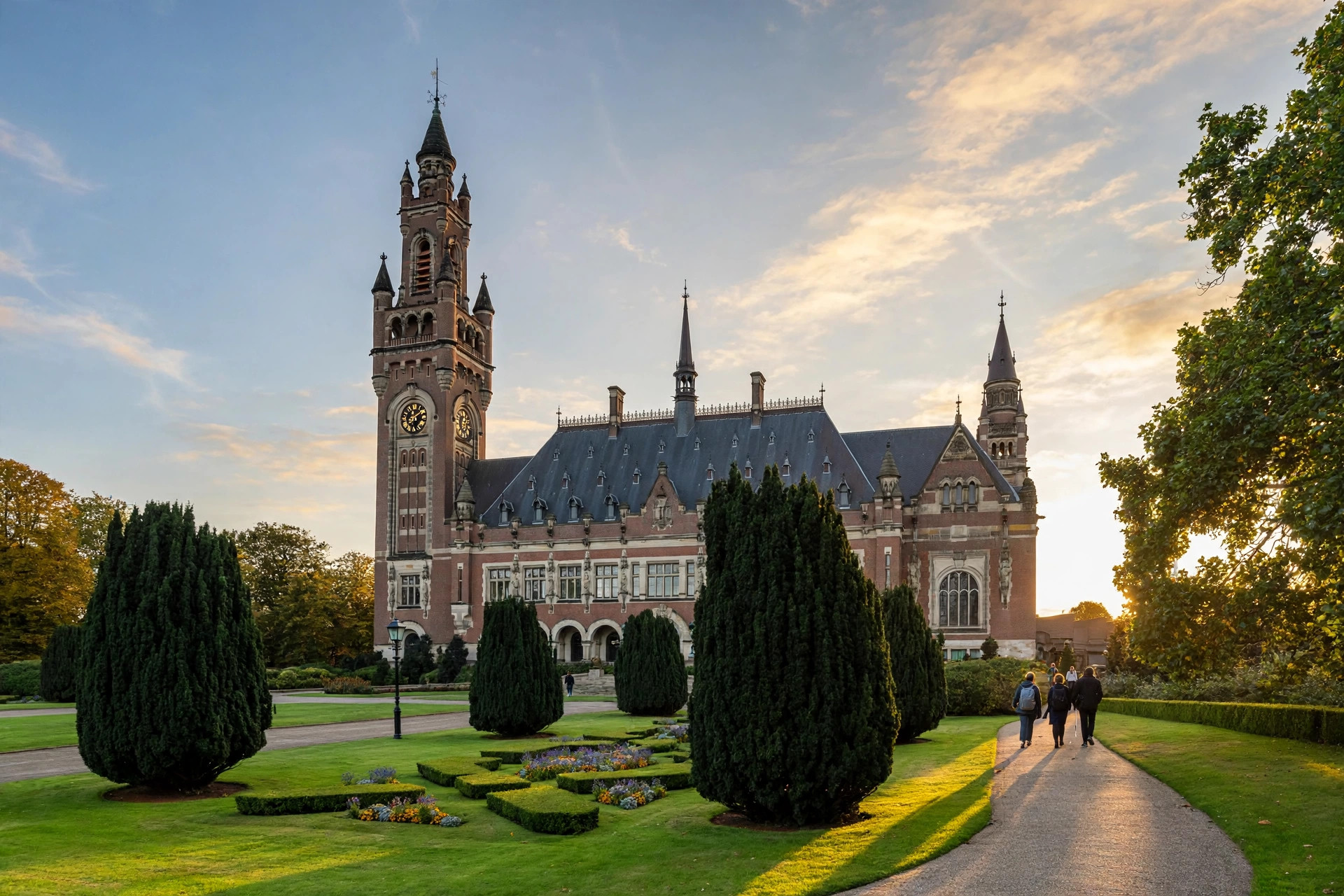
ICJ: Myanmar Committed Genocide Against Rohingya
Myanmar committed genocide against the Rohingya Muslim minority, the International Court of Justice ruled on Thursday, 19 November 2026, in a historic judgment that marks the first time in the court's history that a state has been found responsible for genocide. The World Court in The Hague delivered the verdict in the case brought by The Gambia over Myanmar's brutal 2017 military crackdown in Rakhine State.
What the court ruled on Myanmar committed genocide
"The Republic of the Union of Myanmar has committed genocide against the Rohingya group in northern Rakhine State, in violation of its obligations under the Convention on the Prevention and Punishment of the Crime of Genocide," ICJ President Yuji Iwasawa said while reading the judgment, according to the Straits Times and Channel News Asia.
The court found, by a 9-6 majority, that Myanmar's actions in 2017 had the "intention to destroy" a substantial part of the Rohingya population, meeting the legal threshold for genocide, Al Jazeera reported. It is the first time the ICJ has found a state responsible for committing genocide since the court was established in 1946, and only the fourth time since the Nazi Holocaust that an international court has ruled that the legal threshold for genocide was met.
"The court finds that Myanmar's security forces killed thousands of Rohingya civilians, perpetrated widespread acts of sexual violence as well as acts of extreme violence against children and attacked fleeing Rohingya as they sought to flee in large numbers to Bangladesh," Judge Iwasawa said.
10,000 killed and the evidence behind the verdict
The court found that the evidence supported the estimate that around 10,000 Rohingya civilians were killed during the 2017 clearance operations, Judge Iwasawa said. The court established that at least four genocidal acts had been proven: the mass killing of civilians, the forced displacement of hundreds of thousands of people, serious harm inflicted on the group, and the prevention of births, Al Jazeera reported from The Hague.
The court also found evidence of indiscriminate killings, men separated and executed, sexual violence, and Rohingya homes deliberately burned in several locations. The violence began on 25 August 2017 and drove more than 730,000 Rohingya into neighbouring Bangladesh. More than one million Rohingya now live in refugee camps in Bangladesh, and around 520,000 remain in Myanmar under severe restrictions.
What the court ordered Myanmar to do
The court ordered Myanmar to "allow and facilitate the safe, voluntary, and dignified return to their place of residence" for those who fled the violence, News18 reported. Myanmar must also investigate suspected genocide perpetrators and prosecute them if warranted, and it must compensate Rohingya victims, with the amount to be determined later by the court.
The judgment is final and legally binding, with no right of appeal. However, the court has no independent means of enforcing its decisions, and it remains to be seen whether Myanmar's rulers will comply. The court can only report non-compliance to the UN Security Council.
The case: The Gambia v Myanmar
The case was brought by The Gambia in November 2019 under the 1948 UN Genocide Convention, which allows any state to bring a case against another it suspects of breaching the agreement. The Gambia had the backing of the 57-member Organisation of Islamic Cooperation (OIC), and 11 states later intervened in support. A 15-judge panel considered the case for seven years, and the reading of the judgment took nearly three hours.
Gambian Justice Minister Dawda Jallow told the court the case was about real people. "It is not about esoteric issues of international law, it is about real people, real stories and a real group of human beings," he said.
Myanmar has always denied genocide, saying its operations targeted insurgents after a series of attacks killed a dozen security personnel. "Myanmar was not obliged to remain idle and allow terrorists to have free rein," its representative Ko Ko Hlaing told the judges during hearings in January 2026.
Myanmar's leader Min Aung Hlaing commanded the military during the crackdown. He ousted Aung San Suu Kyi's elected government in a 2021 coup and was installed as civilian president this year after heavily restricted elections.
Why this ruling matters
The ruling adds international pressure on Myanmar's military leadership, and legal experts are watching it for indications of how the court will handle South Africa's case accusing Israel of genocide against Palestinians in Gaza.
For the roughly 1.2 million Rohingya refugees in Bangladesh, the judgment will not by itself decide their return, their citizenship or their safety. Survivors in the camps told AFP they want justice. "I want justice," a 23-year-old Rohingya rape survivor said. Another survivor, Mohammed Osman, 20, said he hoped the verdict would allow him to return home and perform last rites for his parents and younger brother, who were killed by the Myanmar military.
Rohingya refugees in Cox's Bazar watched the ruling on screens at the camps as the verdict was read in The Hague.
Sources: Channel News Asia, Straits Times, Al Jazeera, Nikkei Asia (Reuters), News18, Haaretz, Daily Pioneer
Comments
No comments yet. Be the first to share your view.