
Islamabad Legislative Assembly: Government Plans Separate Assembly Led by Elected Mayor
By DunyaDesk · 2026-11-16
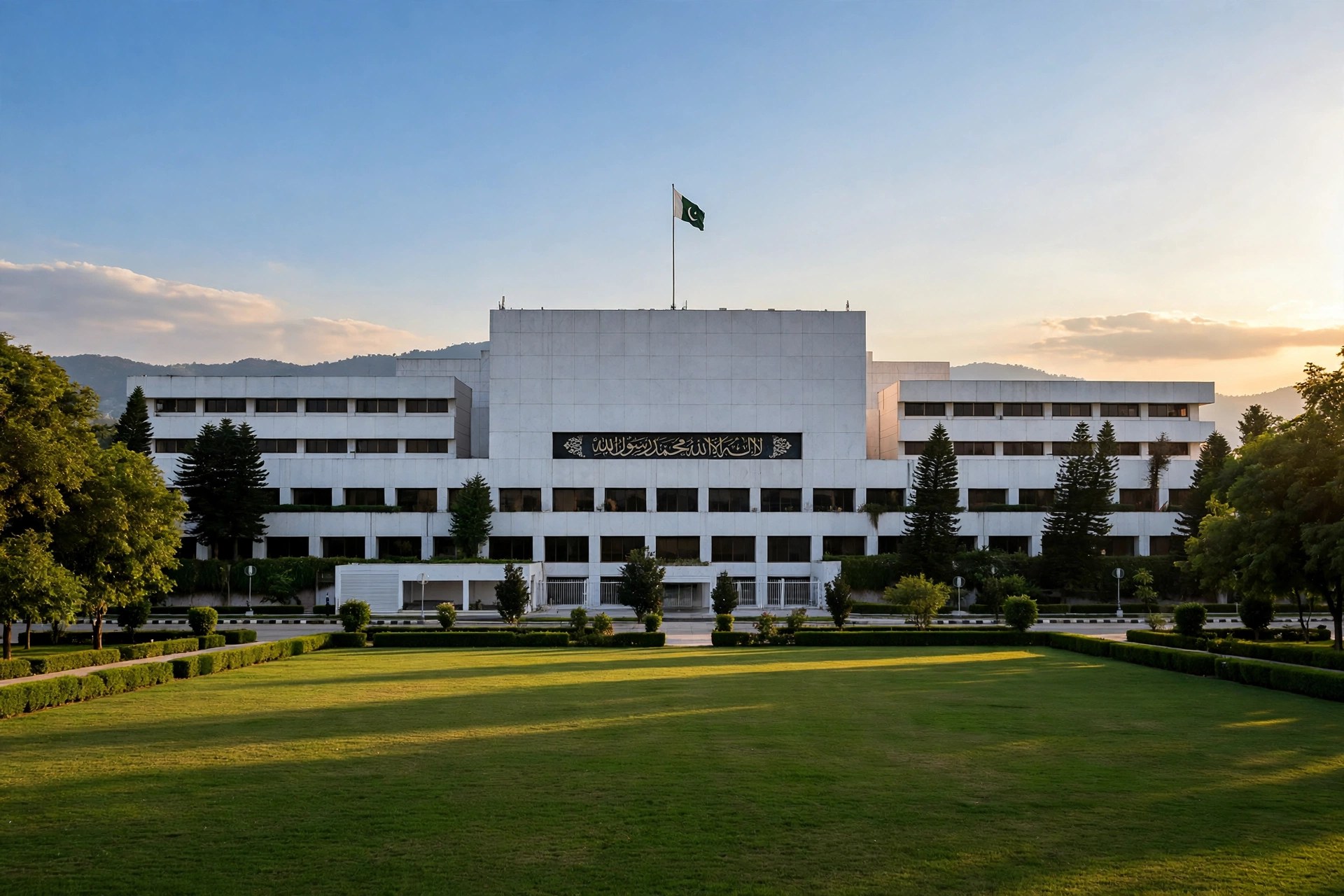
The Islamabad legislative assembly is set to become a reality, with the government intensifying efforts to set up a separate legislative assembly for the capital, headed by an elected mayor. Dawn reported on Monday that if all goes as planned, the new assembly will lead the capital city, ending years of uncertainty over how Islamabad is governed. The proposal comes from a high-profile committee headed by Planning Minister Ahsan Iqbal, which finalised its recommendations some months ago and presented them to Prime Minister Shehbaz Sharif.
Under the committee's proposal, the Islamabad legislative assembly would have 27 members, with 21 directly elected, five seats reserved for women and one for minorities, according to reports. The assembly would elect a chief executive, who would be designated either mayor or chief minister. The Election Commission of Pakistan would conduct elections for the assembly, and members would be subject to the qualification and disqualification rules under Articles 62 and 63 of the Constitution.
Islamabad Legislative Assembly: Powers and Devolution
The recommendations propose devolving powers from the federation to the Islamabad Capital Territory as a federating unit, with a provincial-style government. The new assembly would oversee government departments, while law and order and the Master Plan would remain under federal control. Functions previously performed by the Capital Development Authority (CDA) would be transferred to the new ICT administration, which would have financial autonomy similar to provincial governments.
The government intends to formalise the new governing structure through an Act of Parliament, titled the Islamabad Capital Territory Government Act 2026, rather than a constitutional amendment, according to reports. The draft law would consolidate the existing local government law and the CDA Ordinance into a single law. It would first go to the Federal Cabinet for approval, and would then be introduced as legislation in both the National Assembly and the Senate.
Boundary Expansion Still Undecided
Alongside the assembly plan, new proposals are emerging to expand Islamabad's boundaries. Some TV channels reported on Sunday that Haripur, Murree and parts of Rawalpindi could be made part of Islamabad. The Nation reported that proposals under consideration would bring parts of Haripur district in Khyber Pakhtunkhwa, selected areas of Rawalpindi and localities within National Assembly constituency NA-51 in Murree under the federal capital's jurisdiction.
But nothing is final on the boundaries. "As far as making Haripur, Rawalpindi and Murree part of Islamabad is concerned, nothing is final yet. They are part of separate provinces, and we will see if they can be made part of Islamabad or how laws passed by Islamabad will be implemented in these areas. So, again, nothing is final; these are discussions. But yes, Islamabad will have a separate legislative assembly," a senior government officer told Dawn. The Nation also reported that the government has yet to announce a final decision on the proposed governance structure or any changes to Islamabad's existing boundaries. The Nation's sources put the size of the proposed governing body at between 25 and 30 elected members, a range that differs from the committee's 27-member proposal reported elsewhere.
Why Islamabad Has No Elected Government
The assembly plan comes against a long history of delayed local elections in the capital. Local government elections in Islamabad have been postponed at least five times during the last four years, Dawn reported. The capital has been without an elected local government since the term of its first elected municipal administration expired in February 2021, and its only local government elections were held in 2015 for 50 union councils.
Under the latest schedule, local government elections were supposed to be held on December 20, but the Islamabad High Court suspended the schedule on a petition arguing that the polls could not be held until the legal status of the existing constituency delimitation was conclusively determined. In October, the Election Commission directed its office to prepare the election programme under the 2015 local government law, while a National Assembly committee's report seeking amendments to that law — including dividing Islamabad into three town corporations, each headed by a separate mayor — cast further doubt on the December date.
What Happens Next
For now, the assembly remains a proposal under consideration, not a decided law. The next steps are Federal Cabinet approval of the draft Islamabad Capital Territory Government Act 2026, followed by its introduction in Parliament. Until then, the size of the assembly, the exact title of its head and the question of the capital's boundaries all remain open. What is clear, according to the senior government officer quoted by Dawn, is that a separate legislative assembly for Islamabad will be set up — the question is when, and in what final form.
Source: Dawn, The Nation, Minute Mirror, Sub News English
Comments
No comments yet. Be the first to share your view.