
Israel Certifies Election Results as Herzog Opens Coalition Talks
By DunyaDesk · 2026-11-05
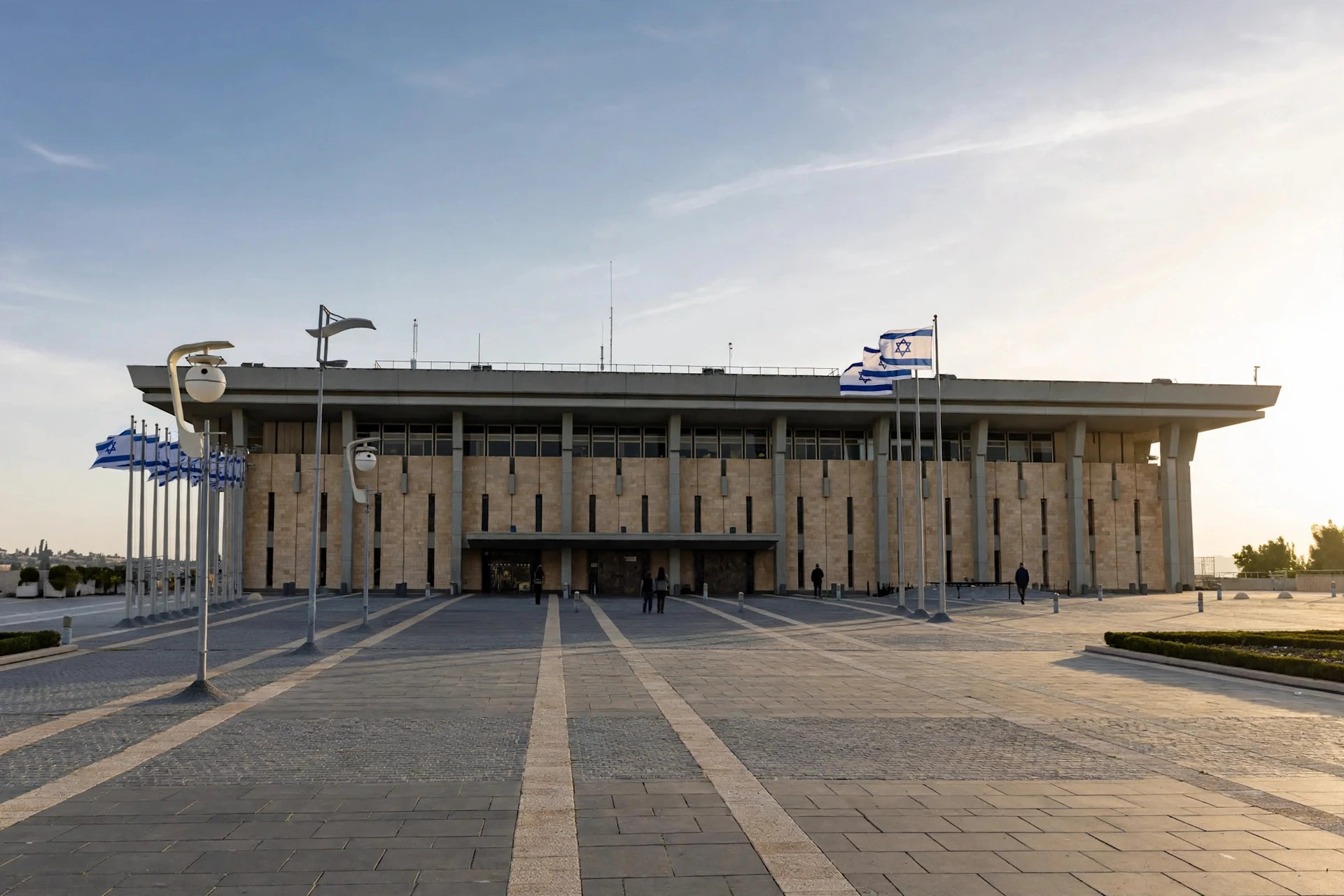
Israel's President Isaac Herzog has accepted the certified results of last week's parliamentary elections and begun consultations with party leaders on who should form the next government — the next chapter of the "Israel election results 2026" story after a vote that left no bloc with a majority. The moves on Wednesday dealt a blow to Prime Minister Benjamin Netanyahu's efforts to discredit the vote, in which he and his allies lost their majority in the 120-member parliament, while Arab-led parties made historic gains.
No evidence of fraud, commission says
Israel's elections commission said earlier on Wednesday that it had conducted a thorough investigation of all parties' claims of fraud and found "no evidence of irregularities that compromised the integrity of the election or affected its results". The commission's acting director said every complaint had been examined "individually and thoroughly", and Attorney General Gali Baharav-Miara also rejected a request to question elected officials without supporting evidence.
Netanyahu and his supporters had repeatedly claimed, without evidence, that the Arab-led parties had "stolen" the election, possibly with foreign assistance. The commission's finding, and the formal handover of the certified results to the president, close that line of attack — though a separate Shin Bet investigation into suspected foreign interference in the election is still ongoing.
The numbers: 53, 48 and a record 19
In the October 27 vote, neither Netanyahu's coalition nor the bloc of his chief rival, opposition leader Gadi Eisenkot, secured the 61 seats required to govern. The prime minister's coalition won 53 seats, down from 64 in the previous election, while Eisenkot's bloc got 48. The two Arab-led alliances together won a record 19 seats after higher turnout among Arab voters.
Herzog concluded the first day of consultations with party leaders on Wednesday night and said talks would continue on Thursday. "The elections are over. Now is the time to face reality," he said, urging both camps to compromise to avoid a new election and accept that "not every commitment and promise can be fulfilled".
Day one: who backed whom
On Wednesday the president met representatives of the Religious Zionism and Zehut, Shas, and Yisrael Beytenu factions. Three factions aligned with Netanyahu's religious-nationalist base recommended that the prime minister be given a chance to form a coalition, while a fourth — Yisrael Beytenu, led by a former Netanyahu ally turned rival — backed Eisenkot.
Eight more parties, including the two Arab-led factions, are scheduled to meet the president on Thursday, with Eisenkot's Yashar party and Netanyahu's Likud going last. Once the consultations end, Herzog will choose the candidate he considers best placed to assemble a coalition, almost certainly Netanyahu or Eisenkot.
Ra'am backs Eisenkot — but 61 is still far
Eisenkot's prospects improved when Ra'am, a major Arab-led party, said it would recommend him. That brought his expected support to 56 lawmakers, according to the Israeli news site Ynet, which is still short of a majority. The other Arab-led party, the Joint List, has not announced its position — Israel's Channel 12 reported that the party was expected to coordinate with Eisenkot, endorsing him if asked or abstaining if he preferred. Its 11 seats could push him past 61.
Netanyahu's 53-seat bloc, by contrast, may not yield 53 endorsements. Degel HaTorah, which holds four of United Torah Judaism's seven seats, said it would recommend neither candidate. The ultra-Orthodox faction broke with Netanyahu over his coalition's failure to pass legislation exempting Haredi men from military service, The Times of Israel reported. One scenario under discussion is a unity government between Netanyahu and Eisenkot.
What happens next
Herzog has several days to announce his choice, after which the nominee will have 28 days to form a government, with a possible 14-day extension. If neither man succeeds, Israel would hold another election early next year. A follow-up will be posted when Herzog names his candidate — and when the shape of the next coalition becomes clear.
Source: Al Jazeera, The Economic Times (AP), Siasat, The Indian Express (Ynet, The Times of Israel and Channel 12 via Al Jazeera)
Comments
No comments yet. Be the first to share your view.