
Kalasha Valleys: The Ancient Culture of Chitral's Bumburet, Rumbur and Birir
By DunyaDesk · 2026-11-14
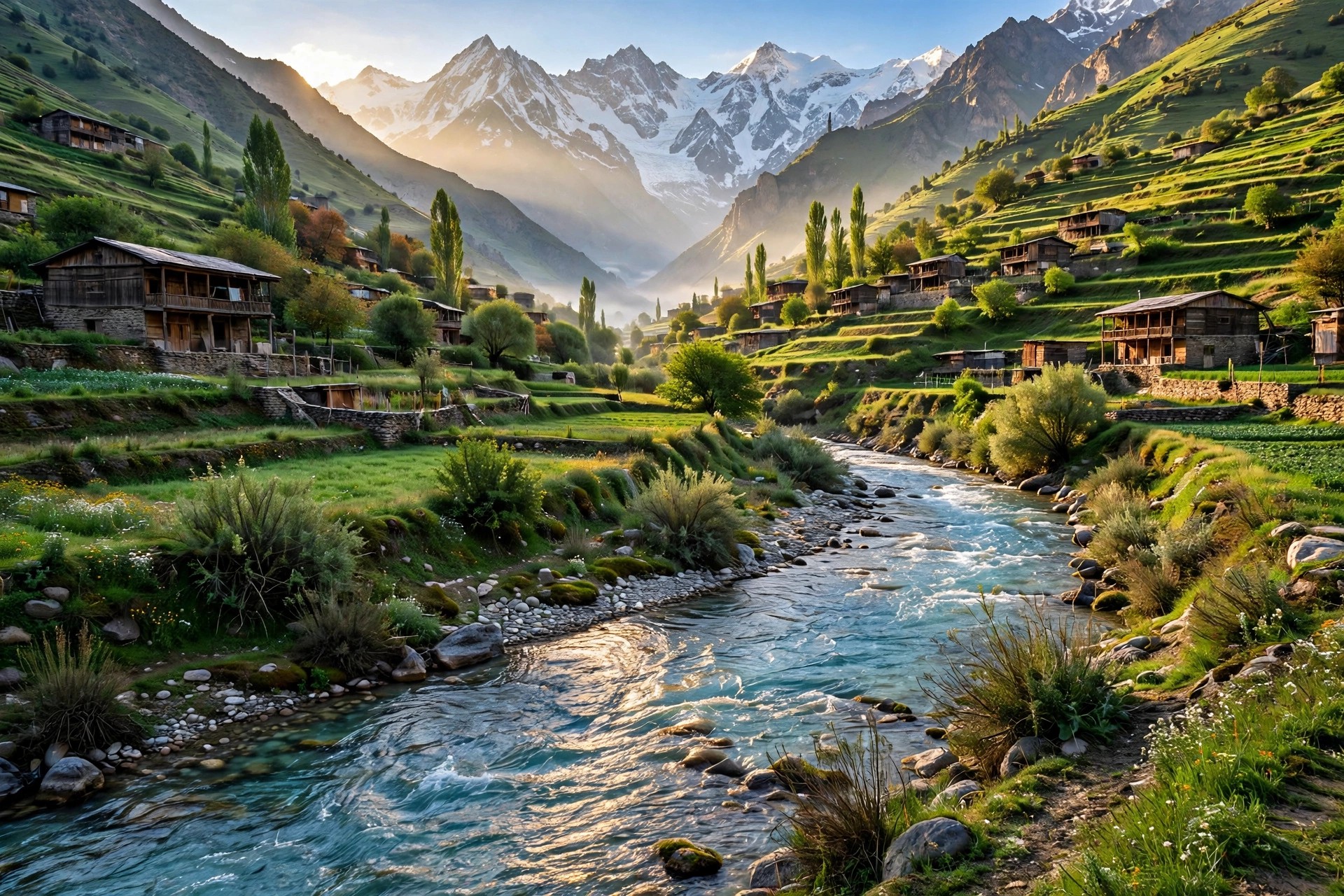
The Kalasha Valleys of Chitral are one of Pakistan's most extraordinary places: three green valleys in the Hindu Kush mountains where around 4,000 Kalash people still live by traditions, a language and a faith entirely their own. Bumburet, Rumbur and Birir are not a museum — they are a living culture, and in 2026 the three valleys were placed on UNESCO's tentative list of World Heritage Sites.
Kalasha Valleys: Three Valleys in the Hindu Kush
The Kalash live in three sub-valleys of Chitral District in Khyber Pakhtunkhwa, surrounded by the rugged peaks of the Hindu Kush, The Friday Times reported. Bumburet is the largest and most populous of the three, and the most visited; Rumbur is smaller and more traditional; Birir, the most isolated, is known for holding its customs most closely.
The valleys lie about 35 kilometres from Chitral city, according to travel guides. Wooden houses climb terraced green slopes above clear rivers, and the Kalash Museum in Bumburet preserves the community's crafts and history. Agriculture, handicrafts and tourism are the main livelihoods, the Khyber Pakhtunkhwa Tourism Department says.
A Culture Like No Other
The Kalash have their own way of life, their own religion, their own language — Kalasha, a Dardic language — and their own rituals and identity, the World History Encyclopedia records. They are the last surviving pre-Islamic indigenous community in South Asia, and their homeland is often described as a well-preserved ethnic and cultural museum.
Local legend says the Kalash are descendants of the soldiers of Alexander the Great, who passed through during his Indian campaign in 326 BC — though historians continue to debate the claim, The Friday Times notes. What is certain is that the community has lived in these valleys for centuries, keeping its festivals, songs, dances and beliefs alive through generations.
Festivals Through the Year
The Kalash year turns on its festivals. Chilam Joshi, the spring festival, is celebrated in mid-May — 13 to 17 May, according to The Friday Times — to welcome the arrival of summer, with music, dance, rituals and communal gatherings. Dawn reported in May 2026 that the five-day festival concluded in Bumburet Valley with hundreds of Kalash boys and girls dancing for hours at the chharsu, the central dancing arena, while residents of Rumbur and Birir converged to join the final rituals.
Uchal is observed in late August to ensure good wheat crops, and Chaumos, the grand winter festival, runs for more than two weeks in December to welcome the new year. Attendance at the festivals holds deep religious significance: a Kalash Qazi told Dawn that a community member who fails to participate for three consecutive years risks losing their relationship with the community.
UNESCO Recognition and the Future
The inclusion of Bumburet, Birir and Rumbur valleys on UNESCO's tentative list of World Heritage Sites in 2026 offered new hope for the community, Dawn reported — and the festival that followed saw hotels fill to capacity with local and foreign tourists. The Kalash Valleys Development Authority says the festivals serve a dual purpose: a celebration of the seasons and a core religious event.
For visitors, the valleys ask for something in return: respect. These are not performances staged for tourists but religious traditions witnessed as an honoured guest. Travel in the valleys, walk the terraces, listen to the music — and leave the culture exactly as you found it, alive.
Sources: The Friday Times, 19 May 2026; Dawn, 17 May 2026; World History Encyclopedia; Pakistan Traveler; The Vacation Project.
Source: The Friday Times
Comments
No comments yet. Be the first to share your view.