
Kumrat Valley: Pakistan's Hidden Forest Paradise in Upper Dir
By DunyaDesk · 2026-11-25
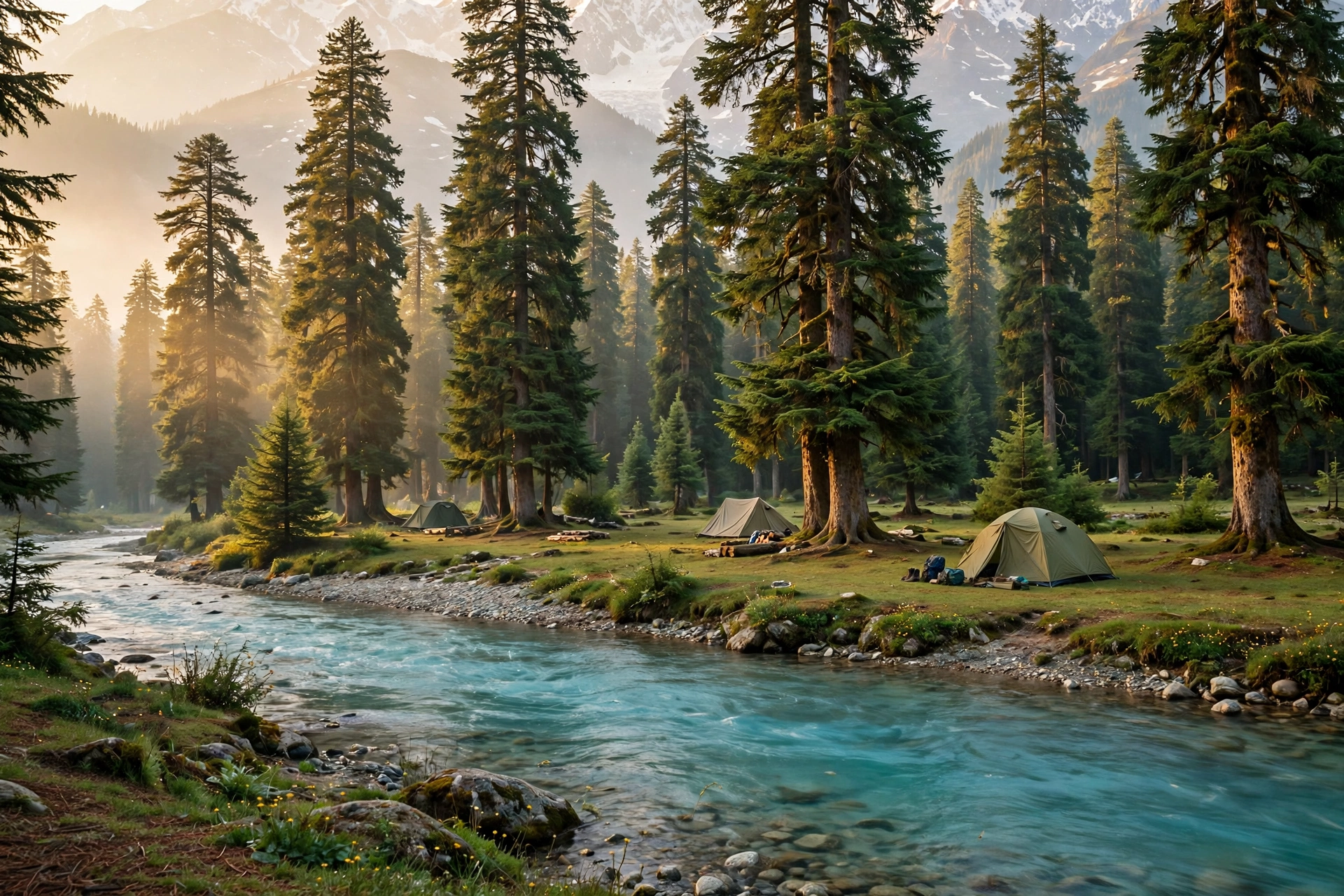
Kumrat Valley is one of Pakistan's most beautiful valleys, and one of its least crowded. Tucked into Upper Dir district in Khyber Pakhtunkhwa, about 370 kilometres from Islamabad, it is a valley of tall deodar and pine forest growing on flat ground beside the icy Panjkora River — a green, quiet world that still feels undiscovered.
The drive from Islamabad takes nine to ten hours, through Mardan, Chakdara and Timergara to Dir and then to the small town of Thal. The road is paved as far as Thal. Beyond that, the track into the valley is unpaved, and only a 4x4 can make it — a normal car will not get through.
The forest and the river
The heart of Kumrat Valley is its forest. Camping pods and huts sit among deodar and pine trees right on the riverbank, and most visitors come simply to camp by the water, walk among the trees and listen to the river. The Panjkora River runs the length of the valley, clear and icy-cold from the snowmelt above, splitting into several channels as it flows down from the Hindu Kush.
The valley covers about 346 square kilometres in the upper Panjkora region, and for years it was closed to outsiders. Today thousands of visitors come each summer, but it still has no ATMs, little or no phone signal, and only basic camps — part of its charm, and part of why travellers are told to bring cash and be ready to switch off.
Jahaz Banda and Katora Lake
Above the valley floor, the trekking begins. Jahaz Banda is a large high meadow at about 3,100 metres, reached by a three to four hour walk from the trailhead above Thal — or partway by jeep and the rest on foot. Its name means "ship's deck", because the meadow's shape resembles the deck of a ship, and it sits ringed by snow-covered peaks.
A further two to three hours beyond Jahaz Banda lies Katora Lake, a glacial lake at about 3,500 metres, fed by snowmelt and named for its bowl shape. It is a full-day trek from the meadow, best started at first light, with no facilities at the lake itself. Trekkers usually camp at Jahaz Banda, climb to the lake, and return to the meadow the same day.
When to go
The practical season runs from May to October, with June to September the best months. The valley is usually snowbound from late autumn to spring, and snow can still cover the upper trail and the lake into July. Visitors are advised to check current conditions with the district administration before travelling, hire a local guide for the upper treks, and remember that the Panjkora is fast and icy — never swim in it, and keep children well back from the edge.
Kumrat Valley rewards the long journey with something Pakistan's busier valleys have largely lost: a forest you can camp inside, a river you can hear all night, and meadows and a lake that still take real walking to reach.
Sources: Pakistan Tour Maker, Graana, UrduPoint, trek.pk, Wikipedia.
Comments
No comments yet. Be the first to share your view.