
Lahore AQI Today Crosses 600 as City Tops World's Most Polluted List
By DunyaDesk · 2026-11-09
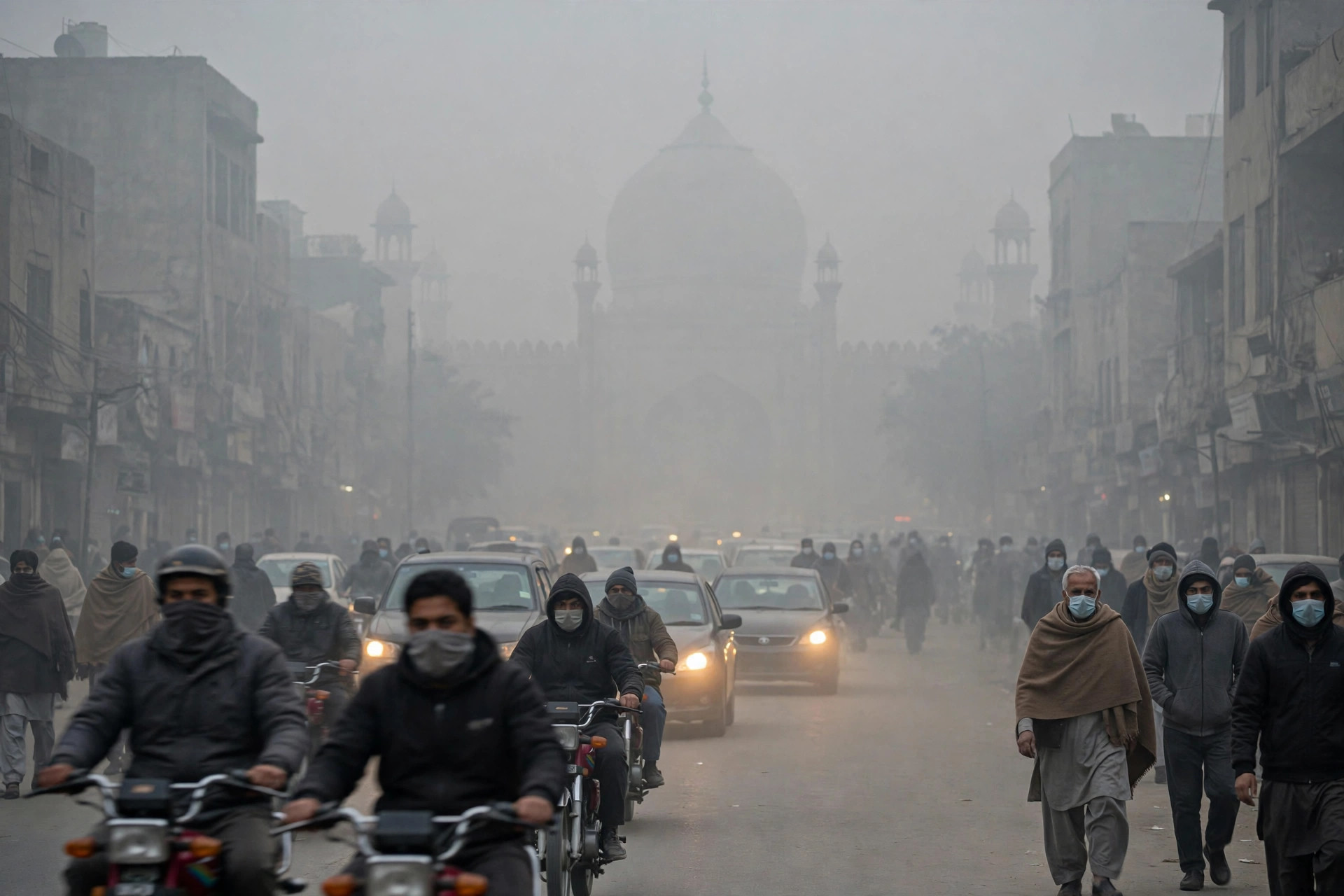
Lahore AQI today climbed past 600 on Monday, November 9, 2026, as the city remained the world's most polluted major city, according to Swiss air quality monitor IQAir. The platform's live global ranking for 9am to 10am placed Lahore at the top with an AQI of 590, while a separate hourly reading on the same platform reached 647 — deep in the hazardous category. Lahore's pollution level was more than three times that of the second-ranked city, Ulaanbaatar, which recorded 177.
Lahore AQI Today — What the Readings Show
The Lahore AQI today varied by time and station, but every reading pointed the same way: hazardous. According to Dawn, citing IQAir, the city's hourly index hit 647 during the morning, while an 8am reading reported by Pakistan Observer and Reuters stood at 563. Fine particulate matter (PM2.5) — the main pollutant — reached 357 micrograms per cubic metre in the morning, which IQAir says is 79.8 times the World Health Organization's annual PM2.5 guideline value. Within the city, Allama Iqbal Town recorded an AQI of 1,033, followed by CERP Office at 864 and Burki Road Paragon at 748, according to Dawn. Daily-wage labourers waited along roadsides in dense smog for customers, as pollution rose sharply in the early morning and late-night hours.
Lahore Smog Spreads Across Punjab
The Lahore smog crisis is not confined to the provincial capital. IQAir's real-time Pakistan city ranking showed Raiwind at 688, Multan at 655, Lahore at 639 and Faisalabad at 600 — all in the hazardous category. According to a separate assessment by the Pakistan Air Quality Initiative, reported on November 9, Lahore experienced unhealthy to hazardous air quality during the first week of November, with an average AQI of 268 and hazardous levels on two days. The Punjab government had forecast that pollution levels would remain high on November 9 and 10, with a slight improvement expected from November 11.
Why Lahore's Air Turned Hazardous — Diwali Smoke and Crop Burning
The deterioration came a day after the Punjab government warned that smoke from Diwali fireworks in neighbouring Indian Punjab, crop-residue burning and easterly winds could aggravate air pollution in Lahore and adjoining districts. A special provincial report issued on November 8 predicted that smoke from Diwali fireworks could reach Lahore within five to 13 hours, and forecast higher pollution in Lahore, Kasur and border areas on the morning of November 9. The report recorded 2,347 crop-residue burning incidents in Indian Punjab up to November 4, including 1,081 in Tarn Taran, Ferozepur and Amritsar — the districts opposite Lahore and Kasur. At the same time, satellite analysis by Hamari Hawa using NASA's VIIRS data recorded 13,241 fire detections in Pakistani Punjab, compared with 3,158 in Indian Punjab, between October 1 and 29, 2026 — more than four times as many on the Pakistani side, with 92 per cent of them on farmland. The Environment Protection Department is expected to release comparative findings on November 10 to assess how much each source contributed.
Health Risks and Government Measures
According to global health statistics cited by Dawn, air pollution is the second-leading risk factor for deaths worldwide, claiming an estimated 8.1 million lives every year, with outdoor particulate matter alone accounting for 4.7 million deaths. In Lahore, the dense smog has forced residents to remain indoors during the worst hours. Punjab Senior Minister Marriyum Aurangzeb has warned that smog intensity could increase across the province over the coming days, and said the government has intensified measures including smog guns near the eastern corridor bordering India. The Environment Protection Agency Punjab reported 679 agricultural fire incidents across the province, of which 650 had been extinguished through surveillance and firefighting operations, using night squads, drones, tractor-mounted fire bowsers and Quick Response Units. In neighbouring Delhi, authorities had already ordered schools to shift to online classes on November 6 as air quality deteriorated after Diwali.
What Happens Next
The Punjab government expects pollution to stay high through November 10, with some improvement likely from November 11 as weather conditions change. The Environment Protection Department's comparative findings, due on November 10, should show how much of Lahore's smog came from cross-border smoke and how much from local sources. DunyaDesk will carry a follow-up when those findings are released and when the next AQI readings come in.
Sources: Dawn, IQAir, Daily Pakistan, Hum English, Arab News Pakistan, Reuters, Pakistan Observer, Dunya News
Comments
No comments yet. Be the first to share your view.