
Lahore Fort: The Shahi Qila, Mughal Citadel of Kings
By DunyaDesk · 2026-11-16
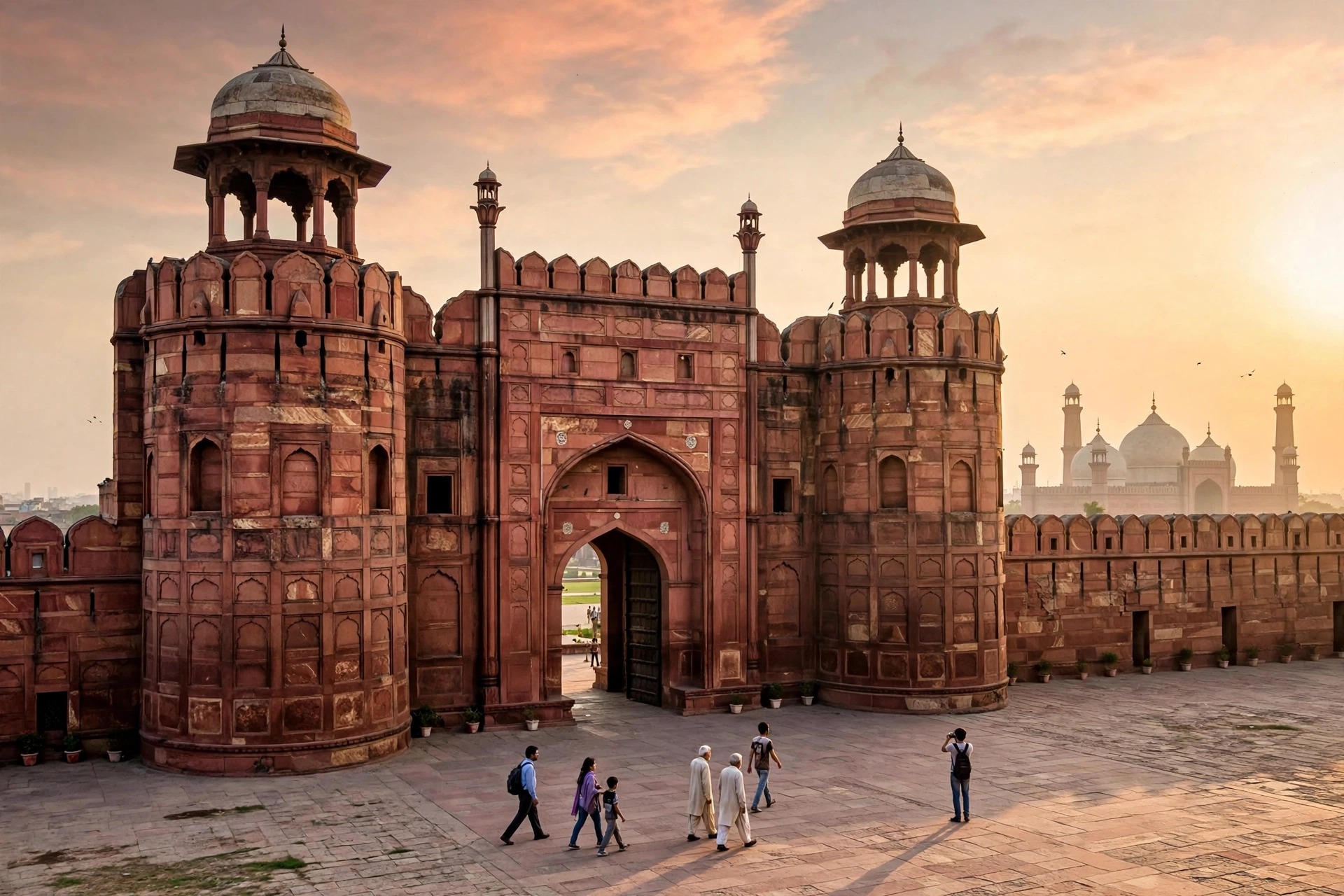
The Lahore Fort, known to Lahoris as the Shahi Qila or Royal Fort, is a citadel in the walled interior of Lahore in Punjab, Pakistan. Spread across about 20 hectares at the northern end of the Walled City, it is one of Pakistan's most visited heritage sites — and, as expresspakistan.pk puts it, arguably the most powerful symbol of Pakistan's Mughal heritage. It contains 21 notable monuments, some of which date to the era of Emperor Akbar.
Though the site of the fort has been inhabited for millennia, the first record of a fortified structure there was an 11th-century mudbrick fort, from the time of Mahmud of Ghazni. The foundations of the modern Lahore Fort were laid in 1566, during the reign of Emperor Akbar, in a style that blended Islamic and Hindu motifs. The fort was then almost entirely rebuilt in the 17th century, when the Mughal Empire was at the height of its splendour — and it is that rebuilding which visitors see today.
Lahore Fort: What Akbar Built, Shah Jahan Adorned
Akbar rebuilt the fort in brick from 1566 and gave it the solid shape that survives today. His successors each added their mark: Jahangir, Shah Jahan and Aurangzeb all expanded the complex over the following century, creating a layered citadel of palaces, audience halls, mosques and gardens.
The most famous of these additions is the Sheesh Mahal, the Palace of Mirrors, built by Emperor Shah Jahan in 1631. Its ceilings and walls are set with thousands of tiny mirror mosaics that catch the light — a small, glittering palace inside the great fort. Nearby stand the Naulakha Pavilion, the Diwan-e-Aam where the emperor held public audience, and the long Picture Wall, one of the most extraordinary decorated surfaces in Asia.
The Alamgiri Gate and the Fort's Later Centuries
The fort's great entrance, the Alamgiri Gate, was built by Emperor Aurangzeb in 1674. It faces the Badshahi Mosque across the broad Hazuri Bagh square, and together the gate, the mosque and the fort form the ceremonial heart of old Lahore.
After the decline of Mughal power, the fort passed through Sikh and then British hands, each leaving its mark on the buildings. Since 1947 it has belonged to the Government of Pakistan, and today it is managed by the Walled City of Lahore Authority. The name Shahi Qila literally means "Royal Fort" — a reminder of its long role as a seat of imperial authority.
Lahore Fort as a UNESCO World Heritage Site
In 1981, the Lahore Fort was inscribed as a UNESCO World Heritage Site, together with the Shalimar Gardens, for its "outstanding repertoire" of Mughal monuments from the era when the empire was at its artistic and aesthetic zenith. The listing recognises the fort under criteria i, ii and iii, as an outstanding example of Mughal art and architecture and its fusion of Persian, Central Asian and South Asian design.
The fort was placed on UNESCO's List of World Heritage in Danger in 2000 and removed from it in 2012, after conservation work. Today it stands as Lahore's great open-air museum of empire — a thousand years of history, from a mudbrick fort of the 11th century to the mirror palace of Shah Jahan, inside a single set of walls.
Sources: Wikipedia (Lahore Fort), sthint.com, expresspakistan.pk, dustanddynasty.blogspot.com.
Comments
No comments yet. Be the first to share your view.