
Mohenjo-daro History: The 4,500-Year-Old Indus City
By DunyaDesk · 2026-11-15
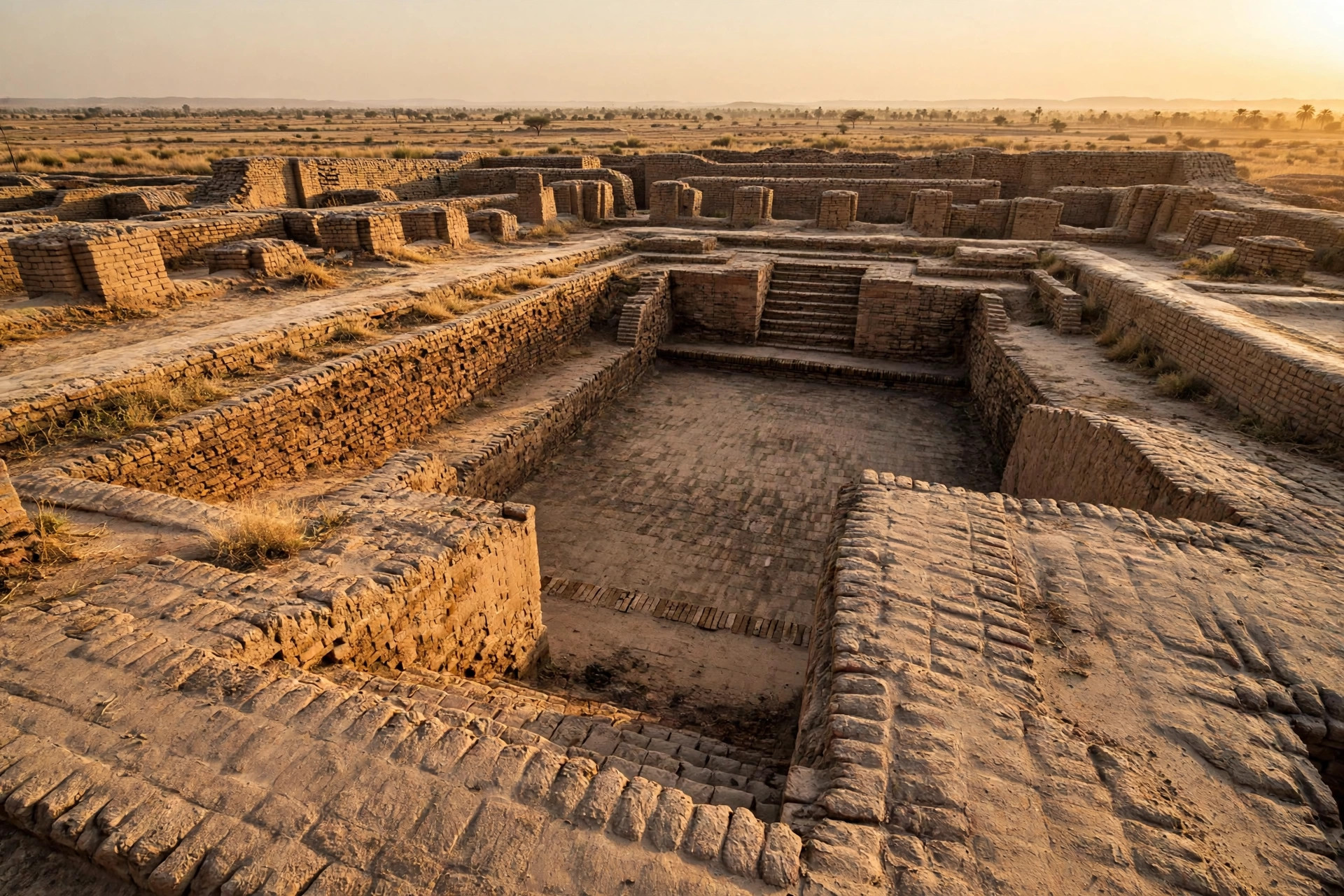
The Mohenjo-daro history begins nearly 4,500 years ago, when a city stood on the banks of the Indus River in what is now Sindh — with straight streets, covered drains, brick houses and a great public bath. Its ruins still stand near Larkana today, and they tell a story older than almost any city on earth.
Built around 2500 BCE, Mohenjo-daro was the largest settlement of the ancient Indus Valley Civilisation and one of the world's earliest major cities. It was contemporary with the civilisations of ancient Egypt and Mesopotamia, and at its height it was home to tens of thousands of people — at least 40,000 by most estimates.
The Great Bath — The World's First Public Water Tank
The most famous building in Mohenjo-daro is the Great Bath, a rectangular pool about 12 metres long, 7 metres wide and 2.4 metres deep, built of finely fitted fired bricks and sealed with bitumen so it would not leak. It sits on the raised Citadel Mound at the heart of the city.
Nobody knows exactly what the Bath was for. Most archaeologists believe it was used for ritual bathing — a practice that echoes the later South Asian custom of sacred bathing — and it is often called the earliest public water tank in the ancient world.
A City Planned Like a Modern Town
Mohenjo-daro was laid out on a grid, with straight streets, covered drains and standardised bricks. The Citadel, a mud-brick mound about 12 metres high, held public buildings including the Great Bath and the so-called Great Granary, while the lower town held houses, workshops and wells.
The city's people traded across a vast region, made fine seals and jewellery, and wrote in a script that no one has yet been able to read. Their most famous sculpture, the small "Priest-King" statue, is now kept at the National Museum of Pakistan in Karachi.
Lost for Nearly 4,000 Years
Around 1900 BCE the city began to decline, and by about 1700 BCE it had been abandoned, along with the other great cities of the Indus Valley. Why it fell is still one of history's great unsolved questions.
The city lay buried until 1922, when R. D. Banerji of the Archaeological Survey of India recognised the ruins as a great prehistoric city. Two years later, Sir John Marshall announced the discovery of the Indus Civilisation to the world.
Its Sindhi name means "Mound of the Dead Men" — a name given by later locals, because by the time it was found the city lay in great burial-like mounds. Its original Bronze Age name is unknown.
Mohenjo-daro Today
In 1980, UNESCO made the Archaeological Ruins at Mohenjo-daro a World Heritage Site — the first site in South Asia to receive the honour. The ruins lie 28 kilometres from Larkana and about 510 kilometres north-east of Karachi, on the right bank of the Indus.
Today, visitors can still walk the same streets that people walked 4,500 years ago, stand beside the Great Bath and look out over the plain where one of the world's first cities rose. But the site is fragile — threatened by erosion, salt damage and the slow wear of time — and keeping it safe is a trust Pakistan holds for the whole world.
Sources: UNESCO; Facts and Details; EncycloReader (Mohenjo-daro); Ancient Travel visitor guide.
Comments
No comments yet. Be the first to share your view.