
Ministers: New Provinces Referendum Cannot Create Provinces
By DunyaDesk · 2026-11-14
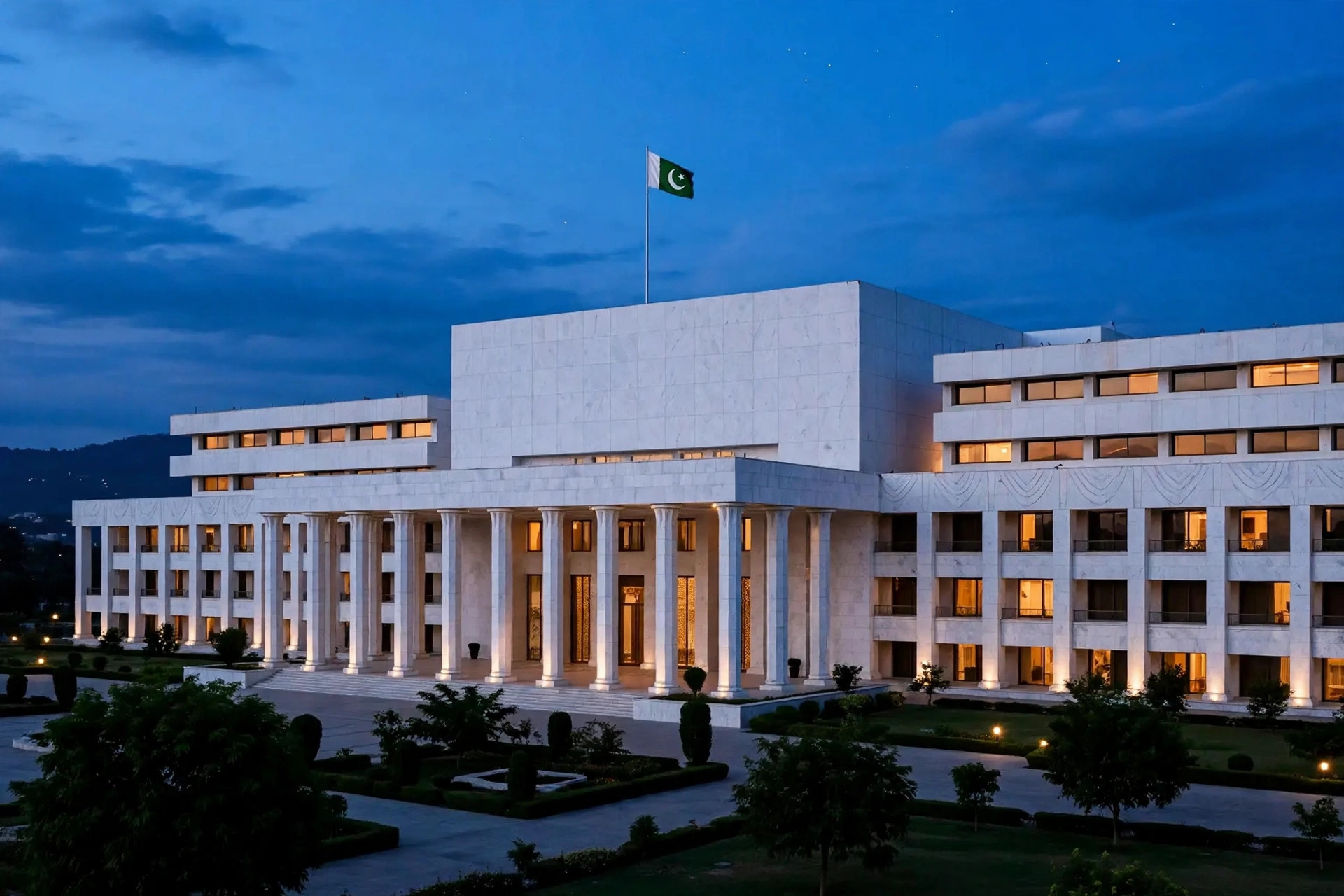
A new provinces referendum alone cannot create new provinces in Pakistan, ministers from the ruling coalition said on Friday, pushing back on Interior Minister Mohsin Naqvi's call for a public vote to settle the question. Parliament and the provincial assemblies cannot be bypassed, they said, and changing a province's boundaries needs a constitutional amendment passed by two-thirds of the assembly concerned.
Naqvi had proposed a nationwide referendum on creating new provinces, calling it the "best solution" to decide the issue and saying he would accept a public rejection of the idea, The Nation reported. Speaking to reporters at the National Cyber Crime Investigation Agency (NCCIA) in Lahore on Thursday, he said the proposal offered a way to bring the prolonged debate to a conclusion, as different political parties continued to hold divergent positions.
New Provinces Referendum: The Constitutional Hurdle
Federal Minister for Parliamentary Affairs Tariq Fazal Chaudhry said on Friday that Parliament and the provincial assemblies could not be "bypassed or negated" on the issue, The Thursday Times reported. In Karachi, Sindh Local Government Minister Syed Nasir Hussain Shah said the PPP's position on the division of Sindh was clear, and that under the Constitution a bill to create a new province had to be passed by a two-thirds majority of the provincial assembly concerned. "Merely calling for a referendum would not lead to the creation of a new province," he said.
Dawn's editorial on Saturday made the same point: Article 239(4) of the Constitution requires any amendment to a province's limits to be passed by two-thirds of that province's assembly, and "no matter how resoundingly a referendum is passed, it will not override that condition." The editorial noted that Defence Minister Khawaja Asif had recently suggested the possibility of as many as 12 provinces under a new configuration drawn on administrative rather than ethnic or linguistic lines, and that there has been talk of a 28th Amendment being rushed through before the year is out — though no formal amendment or bill has been introduced.
Zardari–Naqvi Meeting: What Was and Was Not Discussed
The debate intensified after Naqvi's unscheduled late-night meeting with President Asif Ali Zardari in Nawabshah on Thursday, which lasted nearly an hour. Local media reported that the meeting focused on proposals for new provinces, a possible referendum and potential action against the Jamiat Ulema-e-Islam-Fazl (JUI-F). The President House issued a formal denial on Friday, saying there was "no truth" to reports that provincial matters were discussed, and that the talks had centred on national security and the regional situation, The Nation and the Tribune reported.
Naqvi has said he and PPP Chairman Bilawal Bhutto-Zardari are "almost on the same page" on the issue, while Bilawal has said political matters are about to be reset — a point Naqvi echoed by saying "overall matters are about to be reset". Dawn's editorial, however, noted that Bilawal only recently said he would like the new-provinces matter buried, and that it would be difficult to square an agreement given the PPP's stated stance. The PPP, which governs Sindh and is a key coalition partner, has categorically opposed dividing Sindh, and the proposed 28th Amendment has acquired particular significance because of that opposition, The Nation reported.
At the same NCCIA briefing where he floated the referendum, Naqvi also disclosed an alleged international education-fraud case involving about 5,000 Pakistanis, said 15 suspects had been arrested in child-exploitation cases, and flagged severe NCCIA staffing gaps, according to Particle. He added that no referendum move would go ahead without the consent of all the allied parties in the coalition.
What Happens Next
For now, the referendum remains a proposal, not a decision. No bill has been introduced, no date has been set, and the constitutional route — a two-thirds vote in the provincial assembly concerned, followed by a constitutional amendment — stands unchanged. The debate will now move to Parliament, where, as Bilawal has insisted, such a constitutional matter should be brought before the house rather than raised at business forums or press briefings.
Sources: The Nation, 14 Nov 2026; Dawn (editorial "Referendum talk"), 14 Nov 2026; The Thursday Times, 14 Nov 2026; Express Tribune, 14 Nov 2026; Particle, 14 Nov 2026.
Comments
No comments yet. Be the first to share your view.