
Pakistan Signs 13 Mineral Deals at Pakistan Minerals Forum 2026, FWO Reports 350 Million Tonnes of Copper in Chagai
By DunyaDesk · 2026-11-14
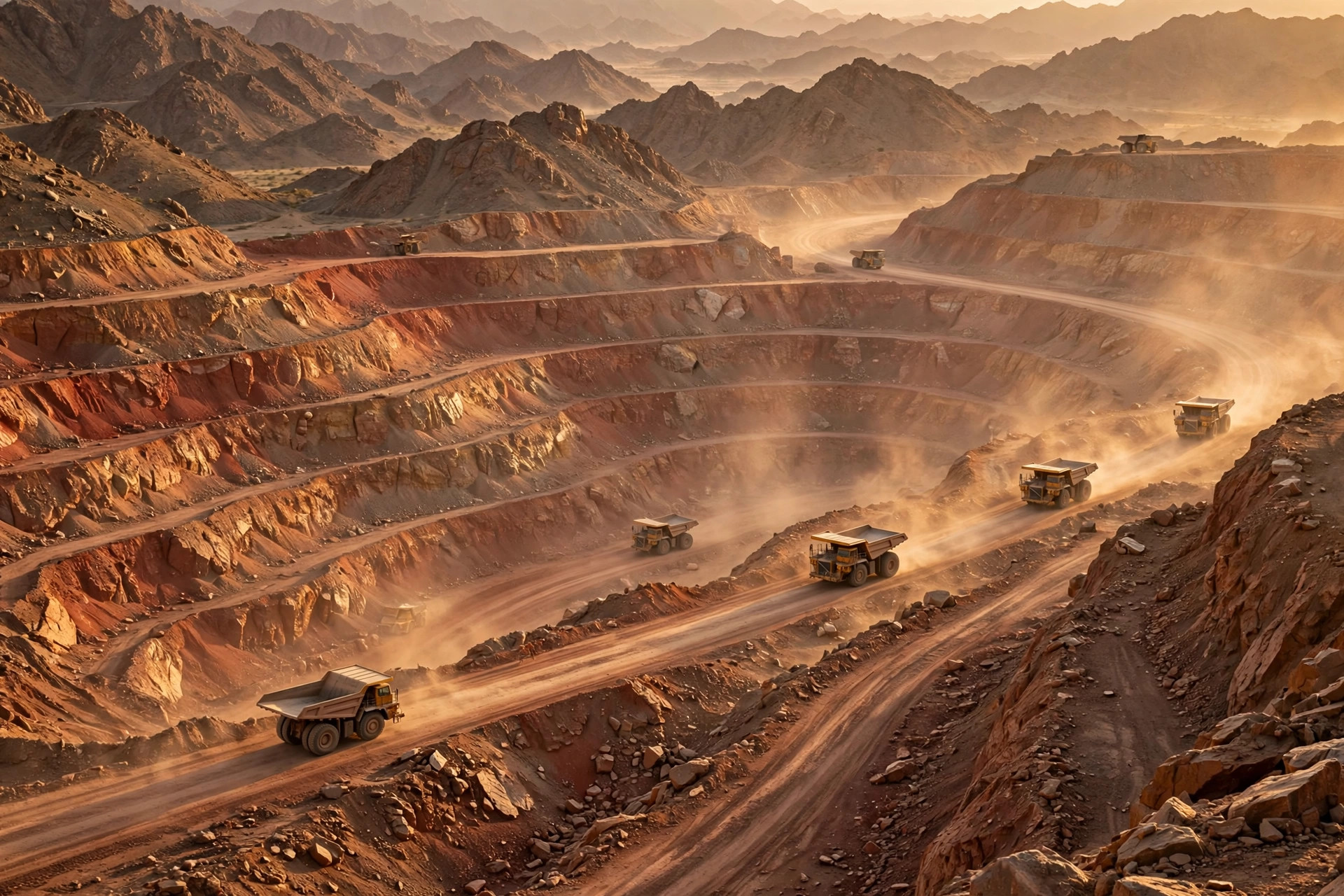
Pakistan signed 13 mineral agreements with foreign companies and institutions as the Pakistan Minerals Forum 2026 concluded in Islamabad on Friday, in the clearest signal yet that the country wants to turn its underground wealth into a processing and export industry rather than shipping raw ore abroad.
The two-day Pakistan minerals forum, held at the Jinnah Convention Centre on 12 and 13 November, drew delegates from more than 60 countries, 122 exhibitors and over 5,000 attendees, according to the organisers. Prime Minister Shehbaz Sharif and Chief of Defence Forces and Chief of the Army Staff Field Marshal Asim Munir addressed the concluding session and assured investors of security and government support.
Pakistan Minerals Forum 2026: What Was Signed
The 13 agreements and memorandums of understanding cover exploration, joint ventures, geological surveys and laboratory development, mostly in Balochistan's Chagai district. Among them, Turkiye's Lidiya Mining signed a joint venture with Mari Minerals for mineral exploration and development in Chagai, and Mari Minerals also agreed a joint venture framework with Turkiye's General Directorate of Mineral Research and Exploration (MTA) for copper, gold and associated deposits in the same district.
The Frontier Works Organisation signed a memorandum of understanding with Ivanhoe Mines for mineral exploration and mining projects in Chagai, while the Pakistan Mineral Development Corporation entered a joint venture with Turkiye's MTA International Company to explore antimony, copper, gold, silver, molybdenum and other critical minerals in Pishin, Balochistan. The Geological Survey of Pakistan signed cooperation memorandums with Turkiye's MTA, Germany's Federal Institute for Geosciences and Natural Resources and the British Geological Survey, and Pakistan and Japan announced plans to strengthen cooperation in geosciences.
Other agreements included a commercial mineral assay laboratory to be set up by the UK's MSALABS with Mari Minerals, and advanced geophysical work by Globacore Minerals and Fleet SpaceANT, the organisers said. More than 40 mineral exploration licences have already been granted in the Chagai and Khuzdar districts, according to The Express Tribune.
350 Million Tonnes of Copper in Chagai
The biggest single announcement of the forum came from the Frontier Works Organisation, which reported an estimated 350 million tonnes of copper in the Dasht-i-Kain area of Chagai district, based on an analysis of approximately half of its drilling data so far. The figure is an estimate, not a proven reserve, and further drilling is under way.
Two more discoveries were announced at the forum. Mining company National Resources Ltd said it had identified copper and gold deposits at eight sites in Chagai after nearly 25,000 metres of drilling, with one drill hole showing a 295-metre stretch containing 0.43 per cent copper and 0.13 per cent gold per tonne. Mari Energies announced a significant copper-gold discovery at its East Siah Diq target, about 50 kilometres east of the Reko Diq mine and 25 kilometres northwest of Nokkundi.
Reko Diq: Production Target and the Railway Link
The centrepiece of the pitch remains the Reko Diq copper and gold project in Chagai, one of the world's largest undeveloped deposits of these metals, owned 50 per cent by Barrick Mining, 25 per cent by the Balochistan government and 25 per cent by three federal state-owned companies. Prime Minister Shehbaz Sharif told the forum that copper and gold production at Reko Diq was expected to begin in 2028, after the project remained stalled for about two decades.
The dates around Reko Diq are not all the same, and they should not be read as one. Balochistan Chief Minister Sarfraz Bugti told the forum the project was expected to become operational by 2029, while The Thursday Times has reported that Barrick slowed development earlier this year and extended its review until the middle of 2027, with first production possibly slipping to 2030. The company has not announced a new date.
Planning Minister Ahsan Iqbal told Nikkei Asia on the sidelines of the forum that Pakistan plans to complete a railway linking the Reko Diq mine to Karachi's Port Qasim within two to three years, through the ML-3 rail upgrade from Rohri to Taftan, at an estimated cost of $1 billion. The minister said dedicated security divisions would be deployed to handle concerns currently delaying mining projects.
From Raw Exports to Processing at Home
The forum's central message was that Pakistan will no longer encourage the export of raw minerals. The prime minister urged investors to "mine in Pakistan, process in Pakistan, manufacture in Pakistan and then export to the rest of the world", calling for refineries, smelters and cable and conductor factories along the Tethyan copper belt. "Your safety is our safety," he told investors, promising to clear bureaucratic delays personally.
Field Marshal Munir assured investors that all possible measures were being taken to ensure the security of mines, workers, investments and industries, and said communities in mineral-rich areas must benefit directly from mining projects. Barrick's chairman John Thornton, whose company holds half of Reko Diq, said the company intends to remain a long-term partner of Pakistan and expressed interest in investing in mineral processing facilities in Karachi and Gwadar.
Foreign lenders have also shown interest: Profit reported that lenders including the US Export-Import Bank expressed interest in providing $1.3 billion in financing for mining projects. That interest is separate from the financing already approved for Reko Diq, which includes $410 million from the Asian Development Bank and $1.25 billion approved by the US Export-Import Bank. The prime minister and the Field Marshal also inaugurated a National Minerals Data Centre and a Geological Survey of Pakistan GeoPortal to give investors open access to geological data.
What the Deals Do Not Yet Mean
The 13 agreements are frameworks for exploration and cooperation, not producing mines, and no production date has been announced for the new copper and gold finds in Chagai. Pakistan's mineral wealth is often put at about $8 trillion, a figure from the Institute of Cost and Management Accountants of Pakistan cited by several outlets — but mining still contributes less than 3 per cent of gross domestic product, and the government says effective policies could lift annual mineral exports from $3 billion to $8 billion.
Whether the forum's signatures become mines will depend on drilling results, financing, security and the processing plants the government is now demanding. For now, the forum has given Pakistan its largest single batch of mineral agreements — and its largest new copper estimate — in one week.
Source: Dawn, The Express Tribune, Profit (Pakistan Today), Nikkei Asia, Minute Mirror, The Thursday Times
Comments
No comments yet. Be the first to share your view.