
KP Emergency: PM Shehbaz Briefs Nawaz Sharif on New Security Plan, Faceless Anti-Terror Courts and Rs70bn Police Funding
By DunyaDesk · 2026-11-09
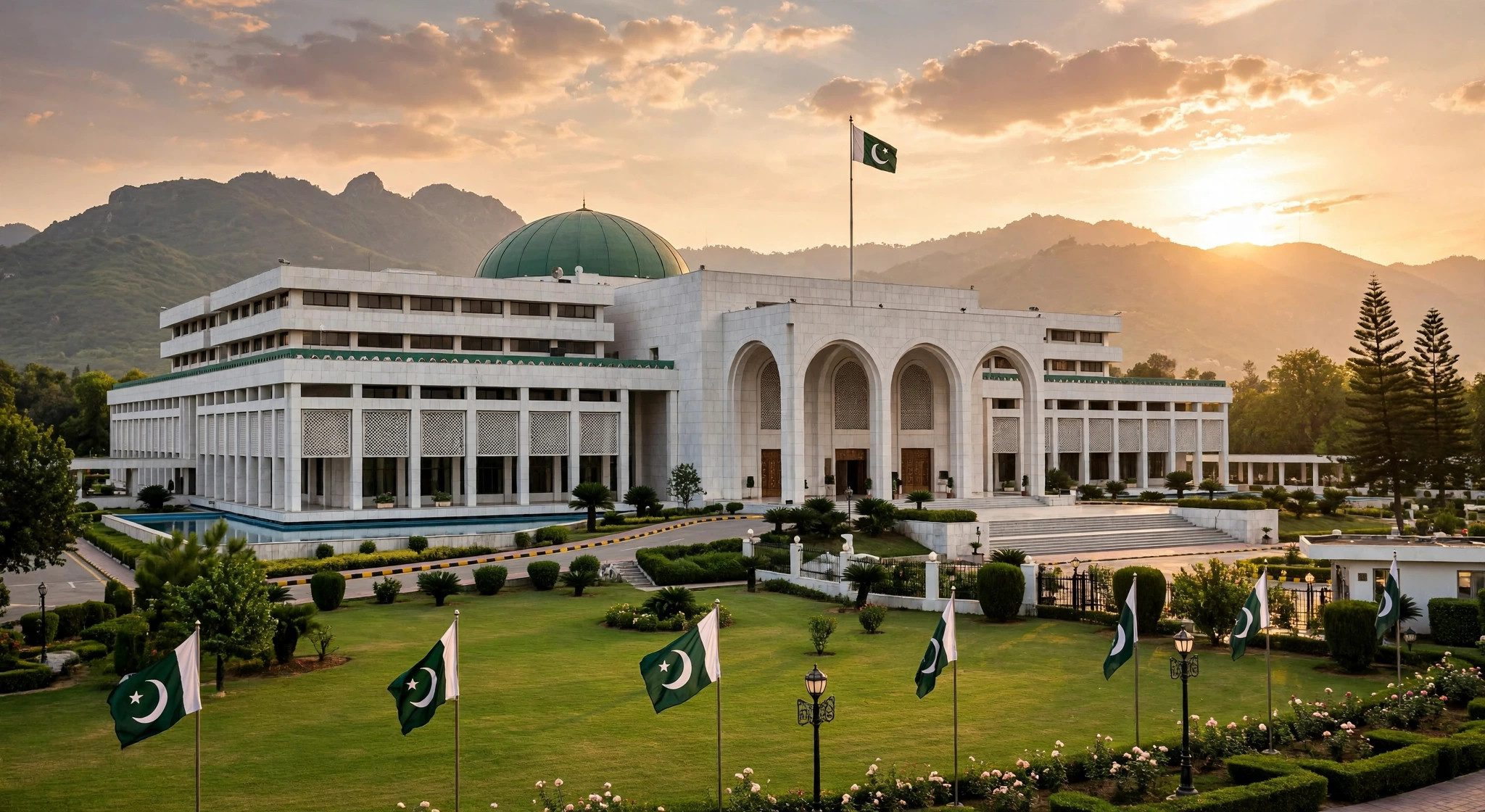
The KP emergency took centre stage in Lahore on Sunday, as Prime Minister Shehbaz Sharif briefed PML-N President Nawaz Sharif on the law and order situation in Khyber Pakhtunkhwa and the new security plan for the province. The meeting at Jati Umra came weeks after the federal government imposed emergency and governor's rule in KP, citing the provincial government's "deliberate disengagement" from the fight against terrorism. The two leaders also discussed the country's political situation and the government's economic reforms.
KP Emergency — Why the Briefing Matters
The briefing is the first detailed account of the federal government's plans for KP since the emergency was imposed. According to state-run APP, the prime minister apprised the party president of ongoing economic reforms, the challenges being faced and the measures being taken. The PML-N leadership defended the emergency decision: the prime minister said the federal government was "compelled" to take the step because of security concerns, while Nawaz Sharif argued that the intervention should have come much earlier. The meeting also reviewed ways to further improve the national economy.
Faceless Anti-Terrorism Courts Planned
To intensify the war against terrorism in KP, the provincial set-up has announced plans to establish faceless anti-terrorism courts. Explaining the move, KP Home Secretary Amjad Ali Khan said witnesses in terrorism cases were reluctant to come forward because of security concerns. "So, we have recently sent the amendment to set up faceless anti-terrorism courts. Through this, not just the protection of witnesses, but that of prosecutors and judges will also be ensured," he said at a briefing. The courts are meant to shield judges, prosecutors and witnesses in terrorism trials.
Rs70 Billion a Year for Police and CTD
The home secretary announced that the current set-up will spend Rs70 billion annually on police and the Counter-Terrorism Department (CTD) — Rs59.8 billion for police and Rs10.3 billion for the CTD — with the funds split between infrastructure and procurement. He said only 3.2 per cent of the budget had been allocated for security in the merged districts, calling it insufficient. The CTD, raised in 2014, has purpose-built infrastructure in only 12 districts, while SWAT teams and counter-drone systems are operating at just 12 per cent capacity. Surveillance capacity is to rise to 60 per cent for police and 70 per cent for the CTD, counter-aerial threat capacity from 1 per cent to 50 per cent, and CTD counter-drone capability to 60 per cent.
The Human Cost Behind the Plan
The home secretary said the province had suffered significant losses over the past two to three years: 1,003 personnel of the armed forces were martyred, 627 police personnel were martyred and 808 civilian casualties occurred, while 3,788 terrorists were killed during the same period. To strengthen police capacity, sensitive police stations are being fortified, the Safe City project is being extended, and anti-drone systems are being established in Dera Ismail Khan, Lakki Marwat and Bannu, alongside District Nerve Centres in 10 districts. Satellite systems will cover remote areas, with artificial intelligence monitoring social media, and personnel will receive anti-drone and sniper training. Kinetic operations will be scaled up through intelligence-based operations, area sanitisation, facilitator arrests, Fourth Schedule re-verifications and Rapid Response Force mobilisation.
Governor Kundi: Decisions Will Be Made in Islamabad
Speaking at the briefing, Governor Faisal Karim Kundi said the provincial administration's priority is restoring peace and strengthening the police force, noting that police are at the forefront of the fight against terrorism and must be adequately equipped. He questioned what families of martyrs would say when political leaders disowned the war against terrorism, and noted that even political figures like Maulana Fazlur Rehman face restricted movement in some areas, saying intelligence-based operations were necessary. Mr Kundi said decisions and policies would be made in Islamabad rather than Kabul, Kandahar or Jalalabad, and accused Afghanistan of facilitating India and Israel in using its territory against Pakistan — a claim Islamabad has repeatedly raised internationally. "It is very clear that whoever does not accept our state, Constitution and laws, cannot be engaged in dialogue. Anyone who takes up arms against the state cannot be offered dialogue, will be responded to accordingly," he said. On funding, he admitted the centre might not have paid 100 per cent of the promised Rs100 billion annually for the merged districts, but said the set-up is fighting for it.
What Happens Next
The faceless courts amendment has been sent for approval, and the Rs70 billion police and CTD funding plan is to be rolled out with new infrastructure, surveillance and training. The emergency set-up in KP remains in place, and DunyaDesk will carry a follow-up when the courts are formally notified or the funding is released.
Sources: Dawn, Associated Press of Pakistan (APP)
Source: Dawn, Associated Press of Pakistan (APP)
Comments
No comments yet. Be the first to share your view.