
Punjab Water Crisis: UN Warns Demand Already Exceeds Supply as Groundwater Falls
By DunyaDesk · 2026-11-16
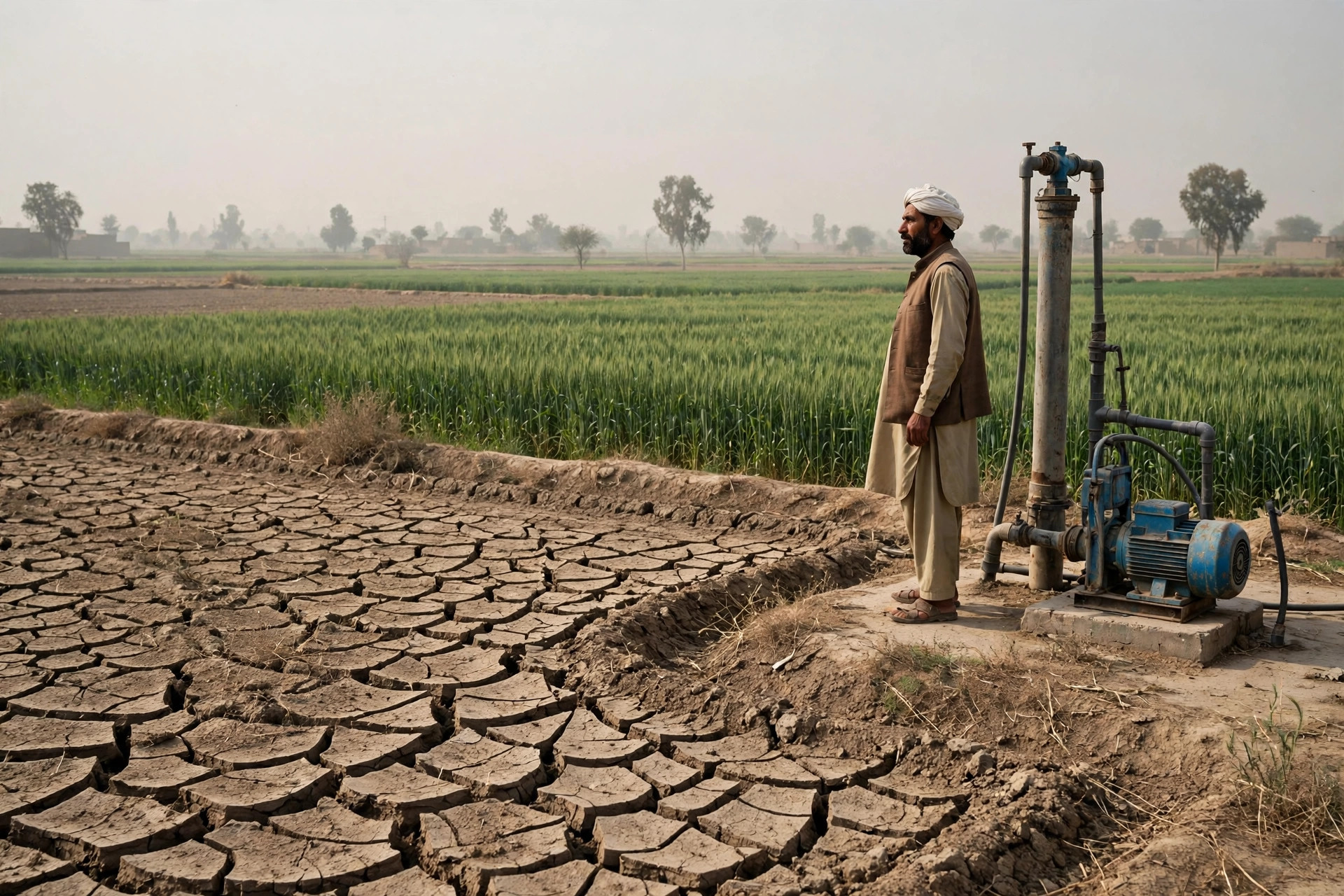
The Punjab water crisis has been laid bare by a United Nations assessment warning that the province's water demand already exceeds supply across all sectors, with groundwater falling by about 5.5 billion cubic metres a year. The Food and Agriculture Organisation (FAO) set out the warning in a report titled Water and Land Accounting in Punjab, published on Monday, which found that the province needs an extra 10 billion cubic metres of usable water each year to bridge the gap and sustain its groundwater aquifer.
The FAO said groundwater was being depleted by about 5.5 billion cubic metres annually over a five-year period, while surface water resources were also under growing pressure, Dawn reported. The findings were based on annual water accounts covering five water years from 2012 to 2017, and the FAO sought expert advice from water specialists, including former Water and Power Development Authority (Wapda) chairman Shamsul Mulk and former Indus River System Authority (Irsa) chairman Rao Irshad Ali Khan.
Punjab Water Crisis: What the FAO Report Found
The report found that the gap between water supply and demand has become particularly acute in Punjab's urban areas, because of limited access to freshwater. It highlighted the growing need for comprehensive water resources management, saying Punjab required more advanced and integrated water services across different sectors and regions. The assessment identified increasing water scarcity, continuous groundwater depletion, inter-sectoral competition and the need to protect renewable water resources as the province's major challenges.
The two headline figures measure different things and should not be added together: the 5.5 billion cubic metres a year is the rate at which groundwater is falling, while the 10 billion cubic metres a year is the additional usable water Punjab would need to close the supply-demand gap and keep its aquifer sustainable. Both figures come from the same FAO assessment, based on the 2012-2017 water accounts.
Why Punjab's Water Matters
Punjab is Pakistan's most populous province and its agricultural heartland, so a water shortfall there reaches far beyond the province's borders — into food production, city supplies and the wider economy. Dawn's video explainer on the report notes that the findings carry risks for agriculture, cities and the wider economy, and recommends urgent changes to water management.
The report's message is not that Punjab has run dry overnight, but that demand has already overtaken supply and the groundwater cushion underneath the province is shrinking every year. Without a change in how water is managed, the shortfall will keep growing as cities expand and farming continues to draw heavily on groundwater.
What the Report Recommends
The FAO report calls for stronger, integrated management of Punjab's water resources, with better planning across sectors and regions. According to coverage of the report, the FAO has also recommended a dedicated commission to review the province's water policies and existing strategies, so that decisions on allocation, conservation and recharge are taken together rather than in isolation.
For readers, the practical meaning is straightforward: Punjab needs to use less groundwater, waste less water and plan its supplies as one system. The report gives the province the numbers to start from — 5.5 billion cubic metres lost each year, and 10 billion cubic metres more needed to stand still.
Sources: Dawn, Feature Pakistan, Bol News, Milkiyat.
Comments
No comments yet. Be the first to share your view.