
Rohtas Fort: Pakistan's Unconquered UNESCO Fortress Near Jhelum
By DunyaDesk · 2026-11-18
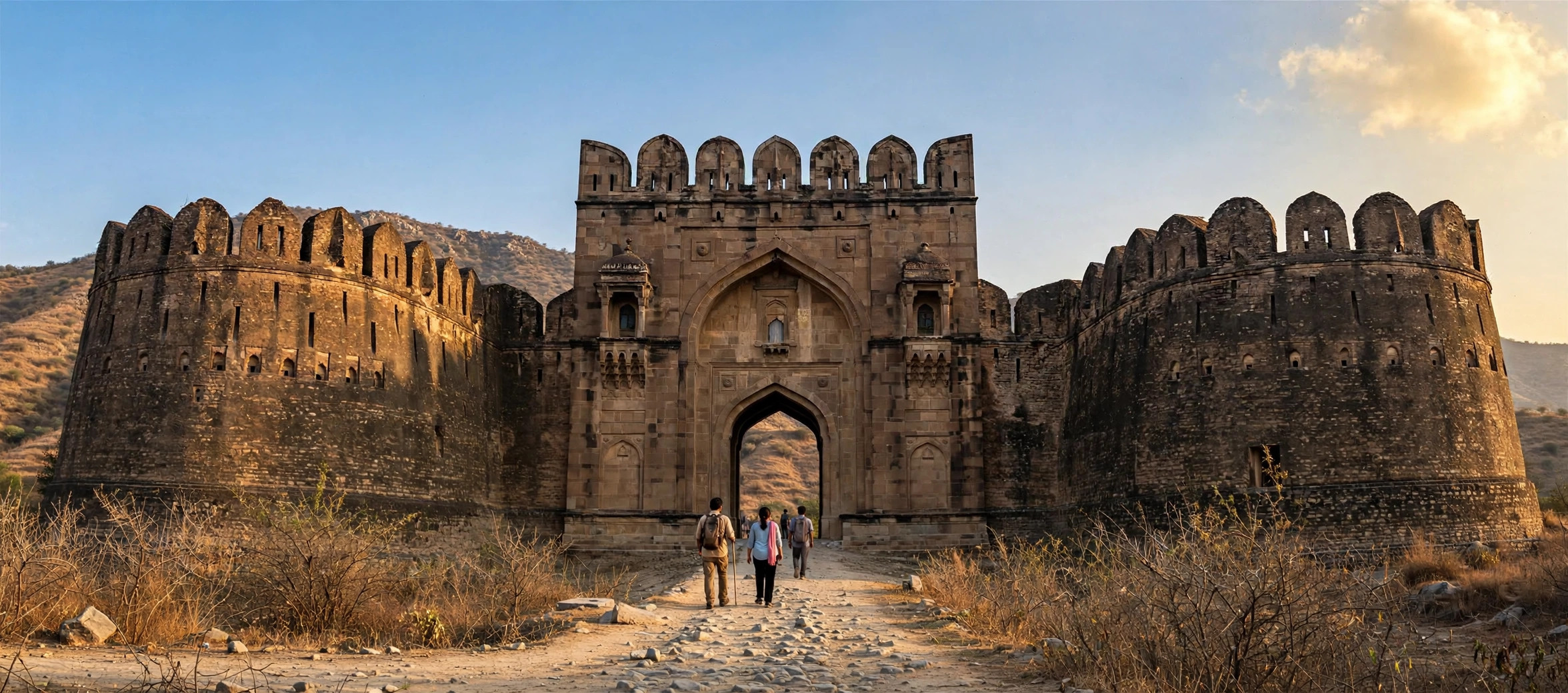
Rohtas Fort: Pakistan's Unconquered UNESCO Fortress Near Jhelum
Rohtas Fort stands on a rocky ridge above the Kahan River near Jhelum, one of the most formidable fortresses ever built in South Asia. Its walls run for more than four kilometres around a 70-hectare hilltop, guarded by 68 bastions and twelve monumental gates — and in nearly five hundred years, no army has ever taken it by storm.
A Fort Built to Stop an Emperor
Rohtas Fort was begun in 1541 by Sher Shah Suri, the Afghan ruler who had just driven the Mughal emperor Humayun out of India. Sher Shah named the fort after Rohtasgarh, a famous hill fort in Bihar that he had captured in 1539. The work was supervised by his minister Todar Mal, who later became famous as a finance minister at Akbar's court.
The fort had two purposes. It was built to block Humayun's return to India, and to control the Gakhar tribes of the Potohar plateau, who refused to accept Sher Shah's rule. Sher Shah died in 1545, before the work was finished. When Humayun returned about a decade later, in 1555, the fort's governor surrendered without a fight — the great fortress never faced the siege it was built for.
Twelve Gates and Walls That Never Fell
UNESCO counts twelve monumental gates in the walls of Rohtas Fort, each built of dressed ashlar stone and each with its own story. The Sohail Gate is the most famous — a massive double gate flanked by two huge bastions, named after the saint Sohail Bukhari. Most visitors enter the fort through it today, and its upper storey houses a small museum.
The Kabuli Gate faces towards Kabul. The Shishi Gate takes its name from the beautiful blue glazed tiles that once decorated its arch. The Talaqi Gate carries a sad legend — its name comes from "talaq", divorce, because a prince's entry through it was said to be ill-fated. The Langar Khani Gate was named for the free kitchen, the langar khana, attached to it.
Inside the Walls: A Living Fort
Rohtas Fort is not an empty ruin. A village has lived inside its walls since the day it was built, and people still live there today, making it one of the few living forts in the world.
Inside the inner citadel, separated from the rest of the fort by its own wall, stand the Shahi Mosque, the small and elegant royal mosque near the Kabuli Gate, and the Rani Mahal, the queen's palace, of which only one of its original four rooms still stands. The Haveli Man Singh, built between 1550 and 1614, is the fort's only palace and its highest point. Deep stepwells, called baolis, once stored water for the whole garrison, including a royal stepwell reserved for the ruling family.
A UNESCO Treasure
In 1997, UNESCO placed Rohtas Fort on the World Heritage List, calling it an exceptional example of the early Muslim military architecture of Central and South Asia. The fort fused Turkish and subcontinental building traditions, and its design influenced later Mughal architecture. It is one of Pakistan's six World Heritage Sites, and one of the least crowded UNESCO sites in South Asia.
The fort has survived remarkably intact, but it needs care. Part of the Talaqi Gate collapsed in 2005 after heavy rain, and the 2003 earthquake damaged the Shah Chandwali Gate. The Punjab Directorate General of Archaeology and Museums manages the site and has been running restoration work — in July 2026, UNESCO carried out a technical visit to review that work, as reported by Dawn.
Visiting Rohtas Fort
Rohtas Fort sits about 16 kilometres north-west of Jhelum city and about 7 kilometres from the town of Dina, a short drive from the Grand Trunk Road. The best time to visit is October to March, when the Punjab plains are mild and dry. One to two hours is enough for the main sights — the Sohail Gate, the Kabuli Gate and its stepwell, the Shahi Mosque and Haveli Man Singh — but the full circuit of the walls rewards a longer, slower walk. Entry fees and opening hours change from time to time, so confirm them before you set out.
For anyone who loves history, Rohtas Fort is a rare thing: a 16th-century fortress that still looks the way its builders left it, standing guard over the same road it was built to defend.
Sources: Wikipedia, UNESCO World Heritage Centre, The Golden Adventure, DailyLife.pk, AerialViews.org, Pakistan Tourism (PTPC), Government of Punjab.
Comments
No comments yet. Be the first to share your view.