
Tape Ball Cricket in Pakistan: The Street Game That Built a Nation of Fast Bowlers
By DunyaDesk · 2026-11-13
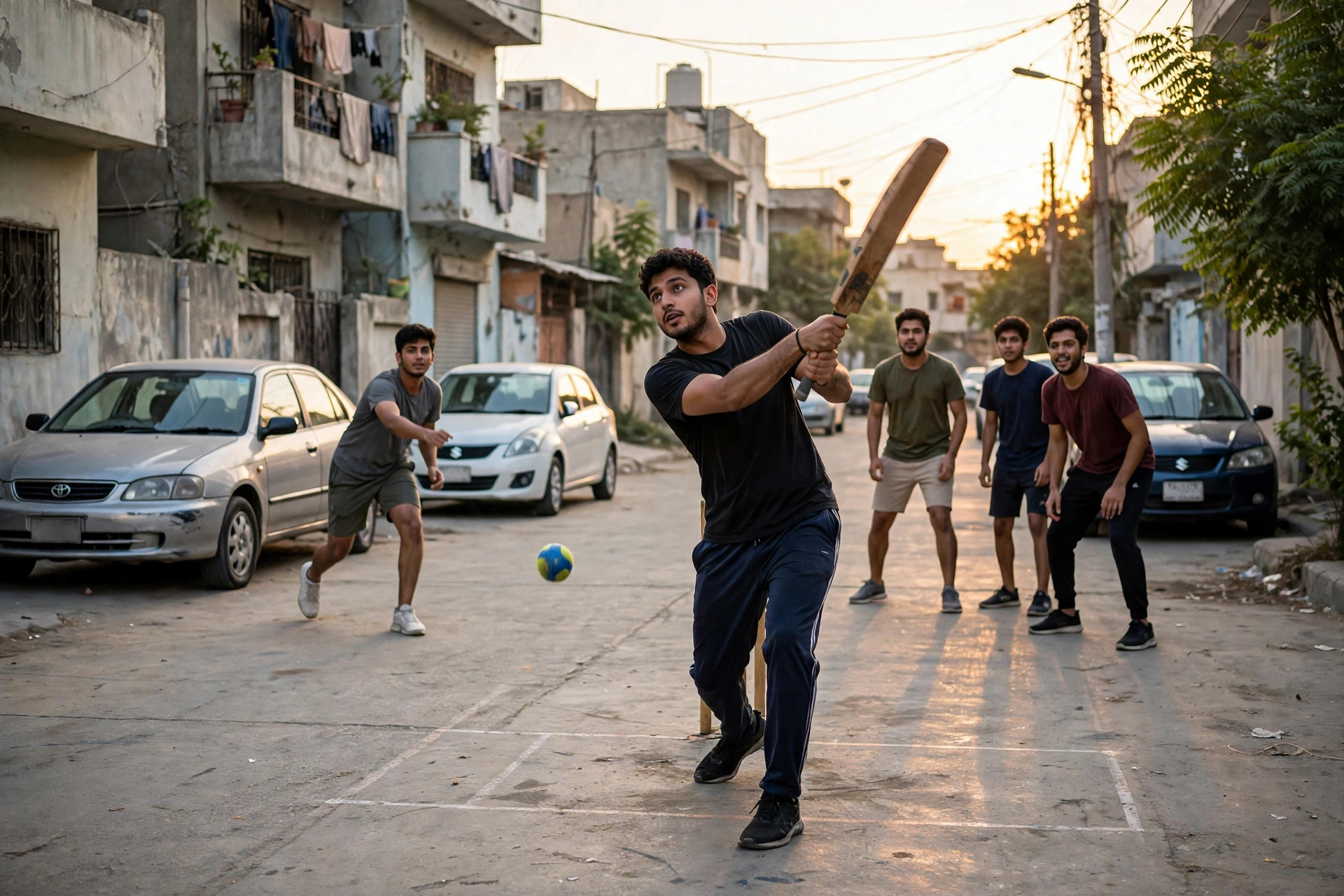
Tape ball cricket Pakistan is not just a game. It is the game played on every street, park, empty plot and rooftop in the country — a tennis ball wrapped tightly in electrical tape, bowled at full pace on concrete, with a bat, a ball and a strip of flat ground. That is all it takes. The tape ball was first pioneered in Karachi, Pakistan. The practice of wrapping a tennis ball in electrical tape began in Karachi street cricket during the 1960s, spreading quickly from neighbourhoods in Nazimabad and the Federal B. Area. The tape makes the ball heavier than a tennis ball, but not as hard or heavy as a leather ball — and, crucially, it lets the ball swing through the air like a leather ball, with serious pace after bouncing.
Tape Ball Cricket Pakistan: Why It Took Over
The format thrives on simplicity. A roll of electrical tape costs around PKR 50–100 and a tennis ball around PKR 100–200, so a whole game costs under PKR 500 — against PKR 10,000 or more for even basic leather-ball kit with pads, gloves and a helmet. No ground is needed: streets, parking lots, parks and rooftops all work, with parked cars serving as boundaries. That is why tape ball cricket became a cultural institution in Pakistan. A 2005 estimate cited by Wikipedia put it plainly: of all those who play some kind of organised cricket in Pakistan, about 80 per cent play with a tape ball and only 20 per cent with a standard cricket ball. The game is fiercely competitive — by the 1980s, tape ball circuits were drawing crowds of several hundred spectators, with formal rules drawn up for tournaments.
The Street That Made the Stars
Pakistan's fast-bowling tradition was built on tape ball cricket. Wasim Akram became a professional tape ball player in Lahore in 1983, and the list of stars raised on the streets runs through the modern game: Haris Rauf, a feared tape-ball specialist in Rawalpindi before he became one of Pakistan's fastest bowlers; Hassan Ali, who grew up playing tape-ball matches in the evenings near Gujranwala, especially during Ramazan; Anwar Ali in Karachi; Faheem Ashraf in Kasur; Umar Gul in Peshawar; and Shoaib Malik on the pavements of Sialkot. The format even pioneered night cricket in Pakistan — tape ball tournaments under makeshift floodlights were drawing crowds years before floodlit professional matches became the norm. Today the game has its own professional stage: the Jazz Tape Ball Premier League, launched in Karachi, features 10 teams from across Pakistan playing 6-over matches with corporate sponsorship, and the International Tape Ball Cricket Federation now governs the sport internationally.
How a Tape Ball Game Works
The rules are simple, and they change from street to street — that is half the charm. A match is usually 6 to 8 overs a side. The ball is a tennis ball wrapped in black electrical tape; some players tape only one side to make it swing, or run layers of tape down the middle to mimic a leather ball's seam. No pads, no helmet, no prepared pitch — just a flat surface, a bat and a taped ball. Every evening, in every town in Pakistan, the same scene repeats: a ball is taped, teams are picked, and a street becomes a stadium. That is tape ball cricket — the cheapest, fastest, most democratic game in the country, and the reason Pakistan never runs out of fast bowlers.
Sources: Wikipedia ("Tape ball"), accessed 13 Nov 2026; CA International, "Why Tape Ball Cricket Is So Popular in Pakistan"; The Pakistan, "Tape-Ball Cricketers Pakistan: PSL Success Stories", 20 Jun 2026; Dream League India, "Difference Between Tape Ball vs Tennis Ball Cricket".
Comments
No comments yet. Be the first to share your view.