
Thar Desert: Pakistan's Living Desert of Music and Peacocks
By DunyaDesk · 2026-11-22
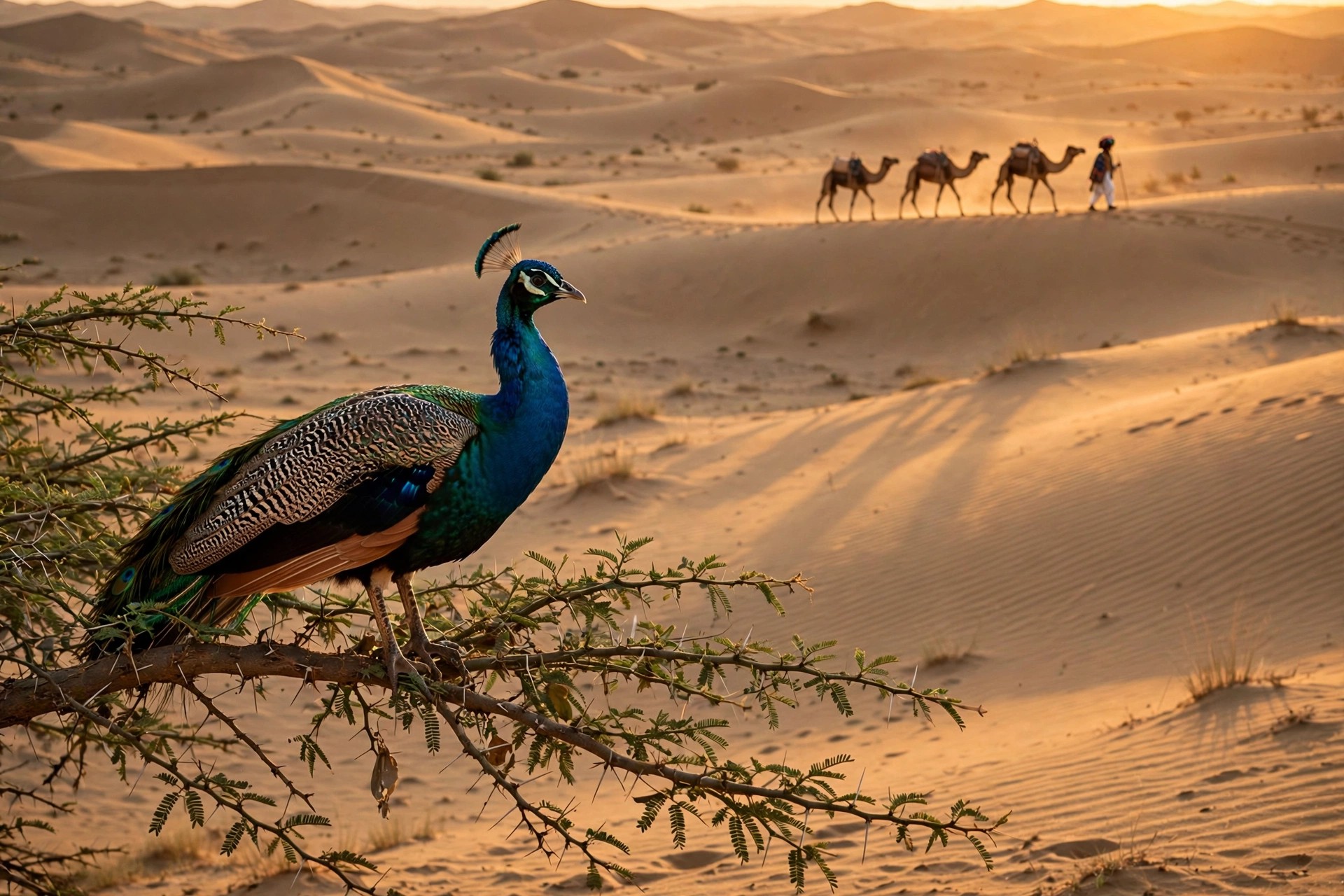
The Thar Desert is Pakistan's largest desert — and one of its most alive. In the far south-east of Sindh, in Tharparkar district, sand dunes, thorny bushes and scattered villages stretch towards the Indian border, and the people who live there have turned a hard, dry land into a culture of music, colour and patience.
Mithi is the district headquarters, and towns like Islamkot and Nagarparkar anchor desert life. The people speak Dhatki, also called Thari, and Muslims and Hindus have lived side by side here for generations, sharing festivals, music and the same wait for rain.
A desert that sings — the folk songs of Thar
Thar's best-known treasure is its music. Lok Geet — folk songs — are sung at festivals, at harvest time, in drought and in rain, and at every moment of strong feeling. The Manganiyar community of hereditary musicians has carried these songs for generations, and singers like Mai Bhagi and Mai Dhai took Thari music from desert gatherings to national radio and television. Kafi singing, dhol beats and dances like the dandan rand, performed by men in a circle with sticks and silk handkerchiefs, are part of every fair and celebration.
Many of the songs are sung from a woman's perspective, and they carry a real ache: in drought years, men often travel away with their livestock to the barrage areas, while their wives and children stay behind in the villages. The songs hold that waiting — for rain, for return, for a better year.
Peacocks, embroidery and the wait for rain
When the monsoon finally comes, the Thar Desert turns green, and the peacocks dance — a sight the folk songs celebrate again and again. Thari women wear flowing ghagras and mirror-work embroidery, with white bangles up their arms, and carry water from distant wells — the "panhiari", the water girl of the desert, is a figure every Sindhi writer knows. Thari men wear turbans as a mark of pride, and camel caravans still cross the dunes at sunrise and sunset.
Karoonjhar, temples and old stories
Near Nagarparkar rise the Karoonjhar mountains, a low range of hills among the dunes, and old Jain temples like the one at Gorhi village stand as reminders of the desert's long history. Local tradition holds that the lost Saraswati river once flowed through this land — a story the desert keeps telling, even though the river is gone.
The best time to see Thar is just after the rains, when the sand turns green and the peacocks are dancing. But Thar is not only a place to visit. It is a reminder that a desert is not empty — it is full of songs, and of people who have learned to live with very little water and a great deal of hope.
Sources: travel-culture.com, HistoryPak, NED University heritage inventory (Lok Geet), Pakistan Studies (Manganiyar music research).
Comments
No comments yet. Be the first to share your view.