
Ukraine Power Plants: Kyiv Races to Repair Grid Before Winter
By DunyaDesk · 2026-11-13
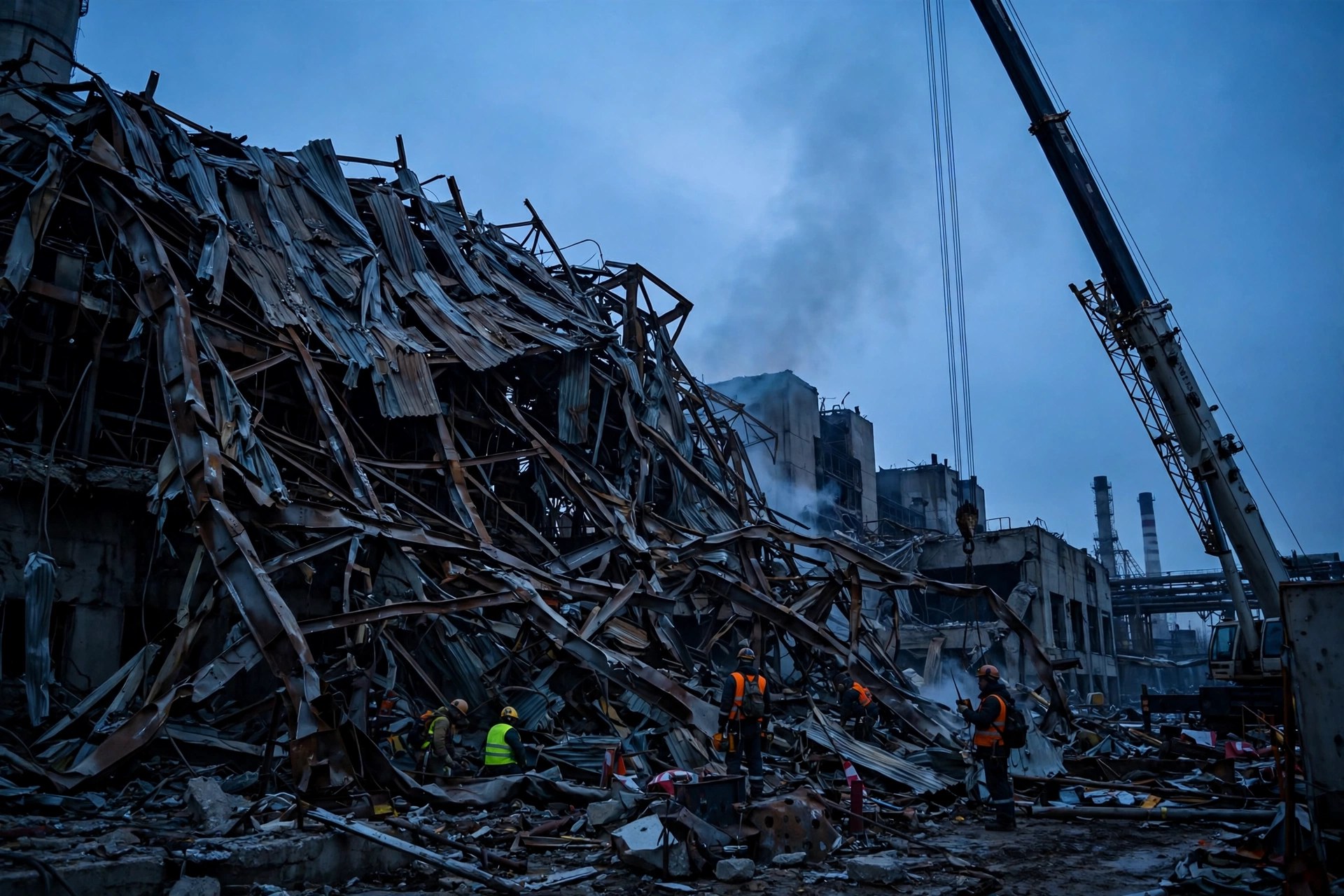
Ukraine is racing to repair power plants wrecked by Russian missiles before winter, as engineers work around the clock on facilities that have been hit again and again — and as Kyiv already faces up to 18 hours a day without electricity. The Ukraine power plants crisis has become the hardest test of the war's fourth winter, with Russia resuming large-scale attacks on energy infrastructure in mid-autumn.
Ukraine Power Plants: The Latest Strike Was the Most Devastating
Early one morning this month, Russian missiles slammed into a plant owned by DTEK, Ukraine's largest private energy company, tearing apart its roof and walls, Reuters reported. A technician at the plant, Oleksiy, told Reuters he had lost count of how many times he had repaired the facility after Russian attacks — but the latest strike was the most devastating, and could leave an entire region without heat and electricity this winter.
Reuters visited the ruined plant, but DTEK asked that its location not be disclosed for security reasons.
Last winter, the coldest of the war, DTEK's five plants came under heavy attack 11 times. Already this November, the first month of the current heating season, Russia has attacked three of DTEK's plants with dozens of missiles and drones, forcing the stations to halt electricity generation. DTEK workers have restarted its plants from scratch more than 70 times during the war, Reuters reported.
Kyiv Blackouts: Up to 18 Hours Without Power
Russia has resumed large-scale attacks on energy infrastructure in mid-autumn, seeking to weaponise Ukraine's harsh winters by leaving millions without heat and electricity, as it has sought to do every year since its full-scale invasion in 2022, Reuters reported.
But this year, Ukraine has struggled to protect its power plants after the US cut deliveries of Patriot interceptors — the only weapon in Kyiv's arsenal capable of stopping Russian ballistic missiles — amid a global shortage.
DTEK chief executive Maxim Timchenko told Reuters that Russia was now also targeting transmission lines, to prevent electricity produced by operating power plants in western and southern Ukraine from reaching consumers in the centre and east, where local production has been heavily damaged. With the transmission lines damaged, Ukraine's central and eastern regions, including Kyiv, are being left without electricity for up to 18 hours a day.
The Kyiv Independent reported on November 9 that Kyiv was bracing for another "brutal" winter, after the largest mass attack on the capital's energy infrastructure of the entire year on November 3. Russia's escalating attacks, including its mass use of faster, harder-to-intercept jet-powered drones, have left residents fearing not only for electricity but also for heat, sewage and food supplies.
Ukraine Energy Crisis: Six Substations Hit in One Night
The pressure on the grid deepened this week. Russia struck six major power substations across central Ukraine overnight into Wednesday, the second night in a row of attacks on the grid, The Thursday Times reported, citing Prime Minister Serhii Koretskyi. Substations were hit in the Vinnytsia, Kirovohrad, Zhytomyr and Cherkasy regions, and power lines were damaged in Kirovohrad and Rivne. At least 14 people were injured.
Ukrenergo, the national grid operator, reported outages for consumers in eight regions, including Kyiv, Dnipropetrovsk, Odesa, Kharkiv, Zaporizhzhia, Zhytomyr, Rivne and Chernihiv. Rolling blackouts have been in place since October, earlier in the year than last winter.
Before the war, Ukraine's thermal power plants generated more than 30% of its electricity, but their share has fallen sharply after repeated attacks, and the country's three nuclear power plants now account for the lion's share of output. Following summer repairs, Energy Minister Denys Shmyhal forecast Ukraine's power capacity would reach 19.6 gigawatts by November — roughly half its pre-war level but in line with last winter's peak consumption, Reuters reported. Reuters could not confirm whether capacity had reached that forecast level.
The Kyiv-based think tank DiXi Group said Ukraine had increased its electricity exports by just over 40% in the week between November 2 and 8, while up to two-thirds of Ukrainian consumers could simultaneously have been experiencing blackouts.
Sources: Reuters, 13 Nov 2026; Kyiv Independent, 9 Nov 2026; The Thursday Times, 12 Nov 2026; The New Voice of Ukraine, 3 Nov 2026.
Source: Reuters
Comments
No comments yet. Be the first to share your view.