
US, Iran Spar at UN Security Council Over Gulf Shipping
By DunyaDesk · 2026-11-15
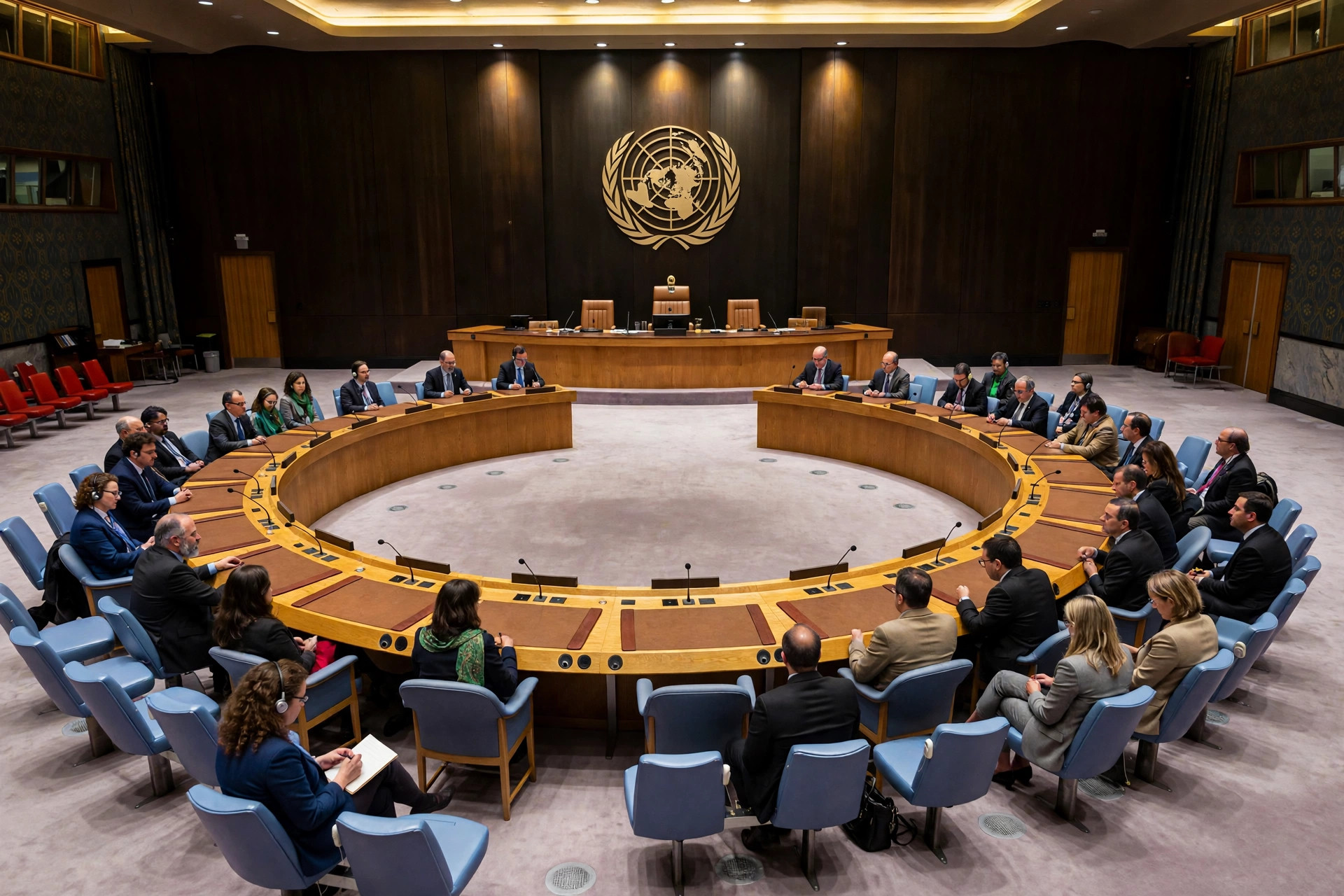
Pakistan called for an immediate end to military provocations in the Gulf and renewed regional diplomacy as the United States and Iran traded sharp accusations at a UN Security Council meeting on Friday over attacks against shipping and threats to maritime security.
The debate highlighted growing concerns that the confrontation could disrupt international trade, energy supplies and food shipments while increasing the risk of a wider regional conflict.
UN Security Council Hears Competing Accounts
Addressing the Council, Pakistan's Permanent Representative, Ambassador Syed Haider Shah, condemned attacks against Gulf countries and called for respect for their sovereignty and territorial integrity, the protection of civilians and commercial shipping, and the restoration of normal maritime traffic.
He specifically condemned Houthi militia attacks and threats against Saudi Arabia, including strikes targeting civilian infrastructure and vessels engaged in lawful trade, while reaffirming Pakistan's support for the kingdom's sovereignty, security and territorial integrity.
Ambassador Shah warned that threats to maritime navigation through the Strait of Hormuz and the Bab el-Mandab Strait endangered seafarers, disrupted international commerce and worsened energy and food insecurity, particularly in vulnerable economies. He called for the protection of commercial vessels and their crews, respect for freedom of navigation and the safe, unimpeded delivery of humanitarian supplies.
US and Iran Blame Each Other
The United States and Iran offered sharply contrasting accounts of the crisis, each blaming the other for the growing threats to maritime security.
Iranian Ambassador Gholamhossein Darzi accused Western council members of ignoring the origins of the confrontation and attempting to reverse the roles of aggressor and victim. He identified the wars launched by the United States and Israel on 13 June 2025 and 28 February 2026 as the root causes of the current insecurity, and he rejected Security Council Resolution 2817, calling it politically motivated and accusing it of denying Iran's right to self-defence.
In contrast, US Ambassador Jennifer Locetta accused Iran of aggression against its neighbours and threats to international shipping. Citing Resolution 2817, which demanded that Iran stop attacks on shipping and neighbouring states and attracted 136 co-sponsors, she said Tehran was defying global opinion.
The Toll on Gulf Shipping
Gulf Cooperation Council Secretary-General Jasem Mohamed Albudaiwi told the Council that Gulf countries had faced more than 7,000 Iranian missiles and drones since 28 February, targeting airports, ports, oil and gas facilities, power stations, water desalination plants and residential neighbourhoods, causing deaths, injuries, extensive property damage and serious environmental repercussions in the Arabian Gulf.
Assistant Secretary-General Khaled Khiari told members that the International Maritime Organization had confirmed 134 incidents and the deaths of 25 seafarers in the Strait of Hormuz and the wider Middle East maritime area as of 11 November, and that the organisation had verified more than 130 attacks on internationally trading commercial vessels since 28 February.
The session was the Council's 10271st meeting, convened at Bahrain's request to discuss threats to maritime security. According to the United Nations' own account of the session, no measure was adopted.
Ambassador Shah argued that dialogue and diplomacy must guide the way forward: all attacks must stop, communication channels should remain open, and regional initiatives and the secretary-general's good offices should receive sustained international support.
Sources: Dawn, 15 Nov 2026; Dunya News, 14 Nov 2026; Khabarwire, 14 Nov 2026 (UN meeting account).
Comments
No comments yet. Be the first to share your view.