
Wazir Khan Mosque: Lahore's Colourful Mughal Masterpiece
By DunyaDesk · 2026-11-17
Wazir Khan Mosque: Lahore's Colourful Mughal Masterpiece
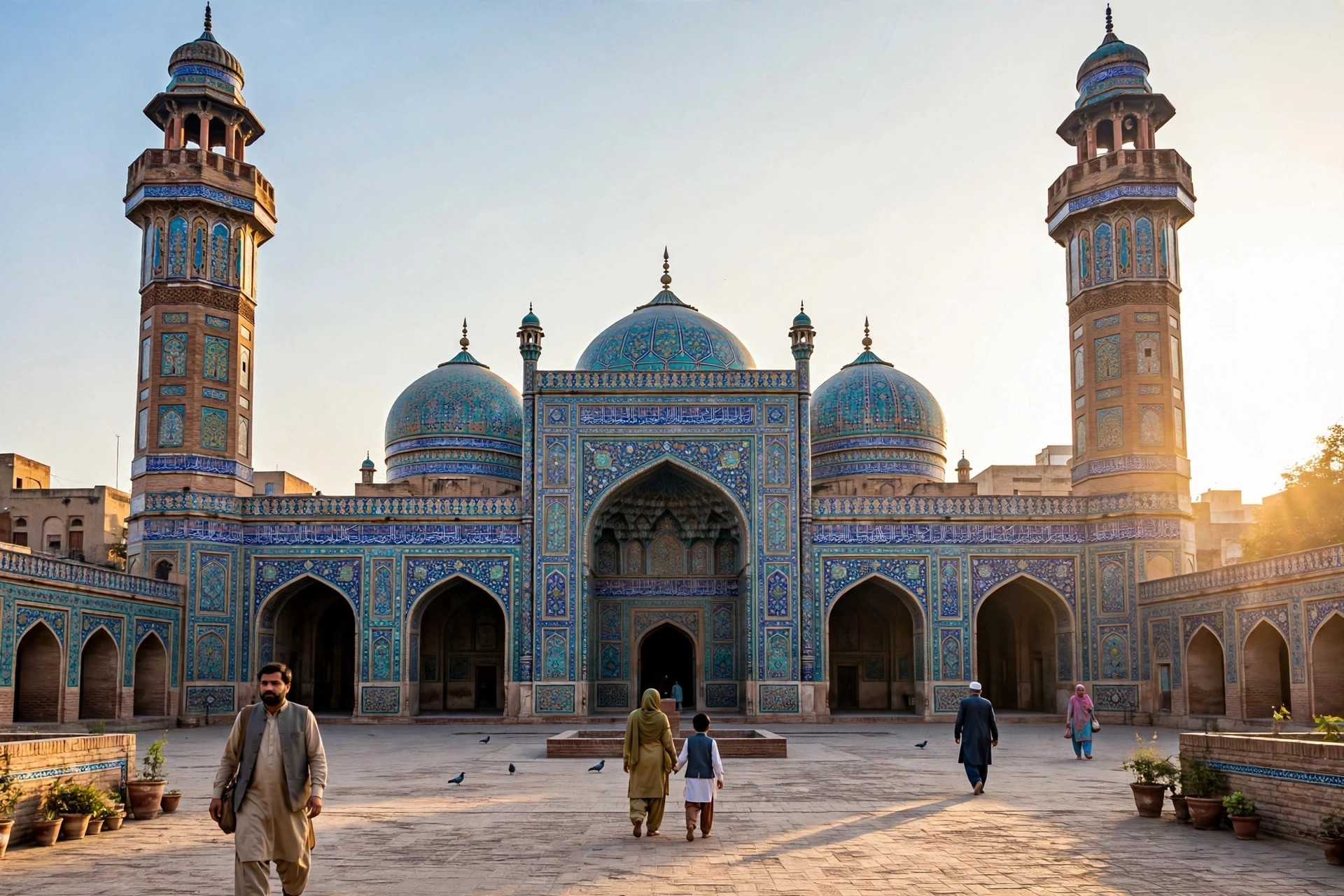
The Wazir Khan Mosque stands in the heart of Lahore's Walled City as one of the most beautiful buildings of the Mughal era. Step through its grand entrance near Delhi Gate and the whole mosque seems to glow — every wall covered in blue, green and yellow tiles, every ceiling painted with delicate frescoes.
A Mosque Built by a Physician
The mosque was commissioned by Hakim Ilm-ud-din Ansari, better known by his royal title of Wazir Khan. He was the chief physician of the Mughal court and the governor of Lahore during the reign of Emperor Shah Jahan. Construction began in 1634 and was completed in 1641, in the same golden age of Shah Jahan's reign that gave the world the Taj Mahal.
Wazir Khan built the mosque as part of a larger ensemble of buildings that also included the nearby Shahi Hammam baths. The mosque also encloses the tomb of a revered 14th-century Sufi saint, Syed Muhammad Ishaq Gazruni, known as Miran Badshah, which is why the site was already sacred long before the mosque rose over it.
The Art of Kashi-Kari
The Wazir Khan Mosque is widely considered the most ornately decorated Mughal-era mosque. Its fame rests on its kashi-kari — the glazed tile mosaic of Persian origin that covers the exterior in shades of cobalt blue, cerulean, green, orange, yellow, purple and white. Floral and geometric patterns, star-shaped flowers, grapevines and cypress trees flow across the walls in symmetrical waves.
The facade of the entry portal facing Wazir Khan Chowk is a masterpiece in itself, covered with elaborate tile work and calligraphy that includes verses of the Quran, sayings of the Prophet Muhammad and prayers for him.
Frescoes That Tell a Story
Inside, the walls are plastered and adorned with highly detailed frescoes that blend Mughal and local Punjabi decorative traditions — a style unique among Mughal-era mosques. The underside of the main dome carries frescoes of trees in pairs, pitchers and platters of fruit, allusions to the Islamic concept of Paradise.
A Living Heritage
The mosque was added to UNESCO's World Heritage Tentative List in 1993. A major restoration project began in 2004, and since 2009 it has been carried out under the direction of the Aga Khan Trust for Culture with the Government of Punjab. The work continues in phases, and some areas may still be screened off — but the mosque remains open and alive with worshippers and visitors every day.
For anyone walking the old Shahi Guzargah, the royal road through the Walled City, the Wazir Khan Mosque is not just a monument to visit. It is a reminder of a time when Lahore's builders turned brick, tile and colour into poetry.
Sources: Wikipedia, Punjab Auqaf Department, Aga Khan Development Network, mytrip.pk, letstravel.pk.
Comments
No comments yet. Be the first to share your view.