
World Reacts to US Midterm Results as Democrats Take Congress
By DunyaDesk · 2026-11-04
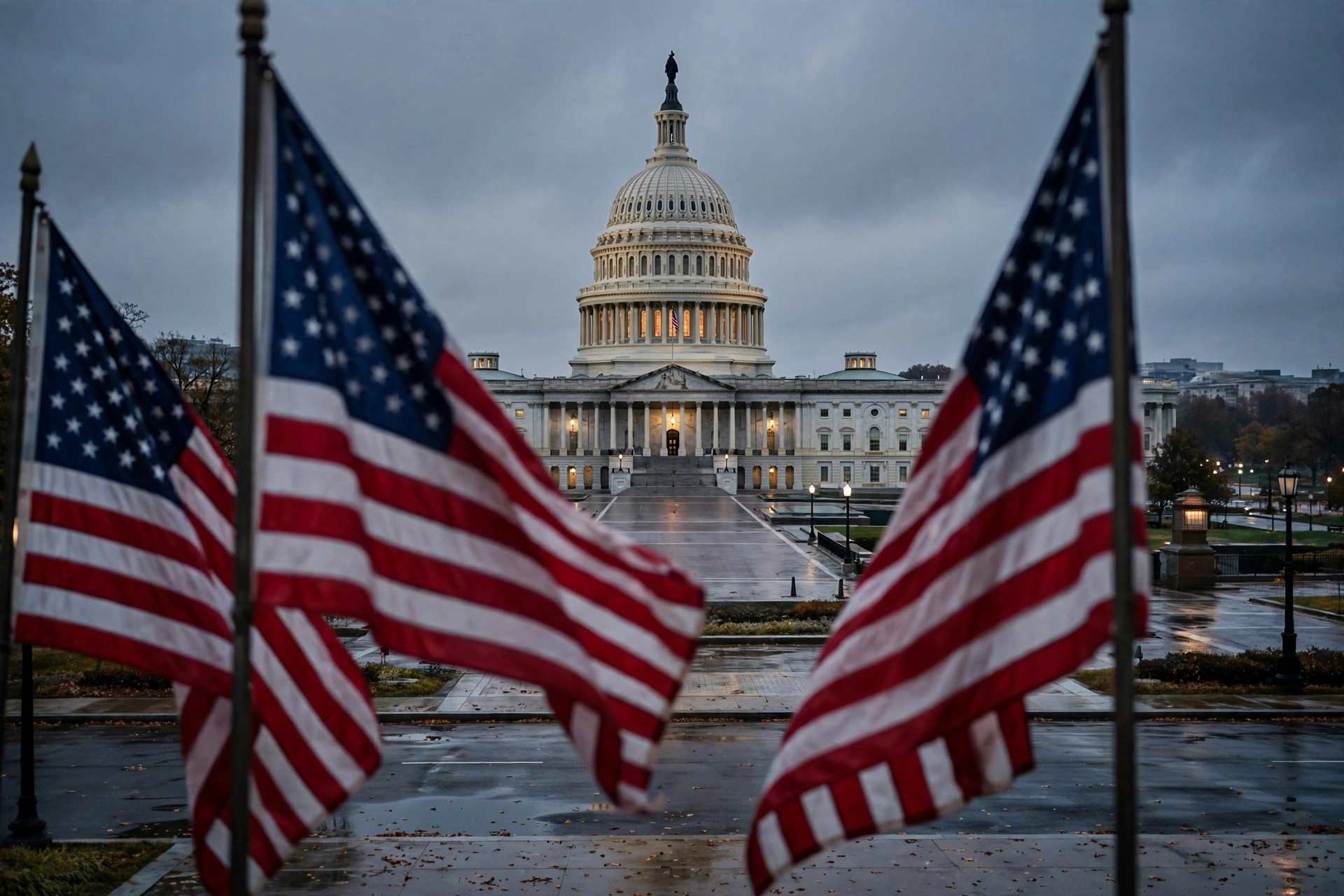
Governments and politicians around the world reacted on Wednesday to the US midterm results, in which Democrats took control of both chambers of Congress — and this US midterm results world reaction is now the clearest picture yet of how foreign capitals read the new political reality in Washington.
Reuters reported on 4 November that the Democrats' "blue wave" is already causing ripples abroad, where trade partners, allies and rivals all see implications in the result. The reaction is not uniform: some capitals welcomed the outcome, others urged caution, and China said the vote was simply an American domestic affair. What follows is that reaction, country by country, as reported by Reuters and Al Jazeera — not DunyaDesk's own assessment of any government.
Europe welcomes the shift
In Europe, several leaders framed the result as a rejection of policies that hurt ordinary people. Spain's Prime Minister Pedro Sanchez wrote on X that American voters had voted against policies that "only serve to impoverish people", and added: "It happened in Brazil. It has just happened in the US. And it will happen soon in Spain," according to Reuters' compilation of reactions. European Parliament Vice President Christel Schaldemose wrote that the result could benefit support for Ukraine, the green transition and relations with the rest of the world, while adding that the EU must continue "standing stronger and standing on its own two feet". Norway's Prime Minister Jonas Gahr Stoere also reacted to Reuters, and Greece's government spokesman Pavlos Marinakis said on local television that Greek-American relations would remain strong and that "nothing will be affected by this outcome" — a reminder that not every ally expects a rupture.
Russia urges Trump to keep going
Russia's reaction was the most cautious. Kremlin spokesman Dmitry Peskov said Moscow was "sincerely counting on" President Donald Trump continuing his "peacemaking efforts", Reuters reported. Deputy Foreign Minister Sergei Ryabkov, quoted by Russian state news agency RIA, said it was best to wait for the final results, and added that the Democratic Party leadership's approach to relations with Russia was "sharply negative". He also said Russia's position on Ukraine and its broader foreign policy "is not based on short-term considerations" and does not depend on "the fluctuations of the political barometer in other countries" — a statement reported as Moscow's words, with no additional claim added here.
China calls it a domestic affair
China's foreign ministry spokesperson Mao Ning told reporters on Wednesday that the US midterm elections were "a domestic affair", Reuters reported, and that Beijing would continue to manage differences and expand cooperation with Washington. Analysts quoted by Reuters said the result could still hand China a perceived upper hand in ongoing trade talks, and give Asian countries more reason to slow down investment pledges they made to avoid US tariffs — but that assessment is reported as analysts' views, not as a confirmed change in policy. China's trade truce with the US, Reuters noted, expires in January, which makes the next round of talks the first real test of the new balance in Washington.
What it means for Ukraine, trade and Iran
For Ukraine, Reuters reported that Democratic control of both chambers will allow Democrats to propose new aid, after Trump largely halted direct US financial and military aid despite broad support from lawmakers in both parties. Democratic Representative Gregory Meeks, a candidate to head the House Foreign Affairs Committee, has introduced bipartisan legislation to block Trump's plan to bring Russian diesel back into the global market — but Reuters also cautioned that the midterms are unlikely to change the administration's position in the trilateral peace talks with Russia, where it has pressed Ukraine to make concessions. The next test of that diplomacy is the Abu Dhabi talks on Ukraine, set for 10 and 11 November.
On trade, Reuters reported that Trump's midterm losses could embolden trading partners to resist his tariff policies, which voters blamed for persistent inflation. India, still negotiating a trade deal with the US, could adopt a wait-and-see approach, analysts said, while Japan and South Korea — which promised $550 billion and $350 billion respectively in US investments under deals with Trump last year — now face a changed political landscape. South Africa's President Cyril Ramaphosa told reporters that "the people of America have spoken" after Democrats took the Senate and the House, and Taiwan's foreign ministry also issued a statement, according to Reuters' compilation.
On Iran, the picture is more mixed. Reuters reported that some Gulf governments now believe Trump has more reason than ever to seek a peace deal and that another full-scale assault on Iran is less likely after the midterms, citing two sources familiar with Gulf government thinking — but it also reported that Trump's electoral defeat may embolden Iran. For Israel, Reuters said a Democrat-controlled House and Senate may intensify congressional scrutiny of its military operations in Iran as well as in Gaza and Lebanon. Those are reported assessments and expectations, not confirmed decisions by any government.
In short, the world did not react with one voice. Europe largely welcomed the result, Russia urged continuity, China declined to comment on another country's vote, and trade partners from Asia to India are watching whether the new Congress changes tariffs, Ukraine aid and the Iran war. The next concrete tests — the Abu Dhabi Ukraine talks and the January expiry of the US-China trade truce — will show how much of Wednesday's reaction turns into policy.
Source: Reuters, Al Jazeera
Comments
No comments yet. Be the first to share your view.