
Zardari, Shehbaz: New Provinces Referendum Needs Parliament
By DunyaDesk · 2026-11-15
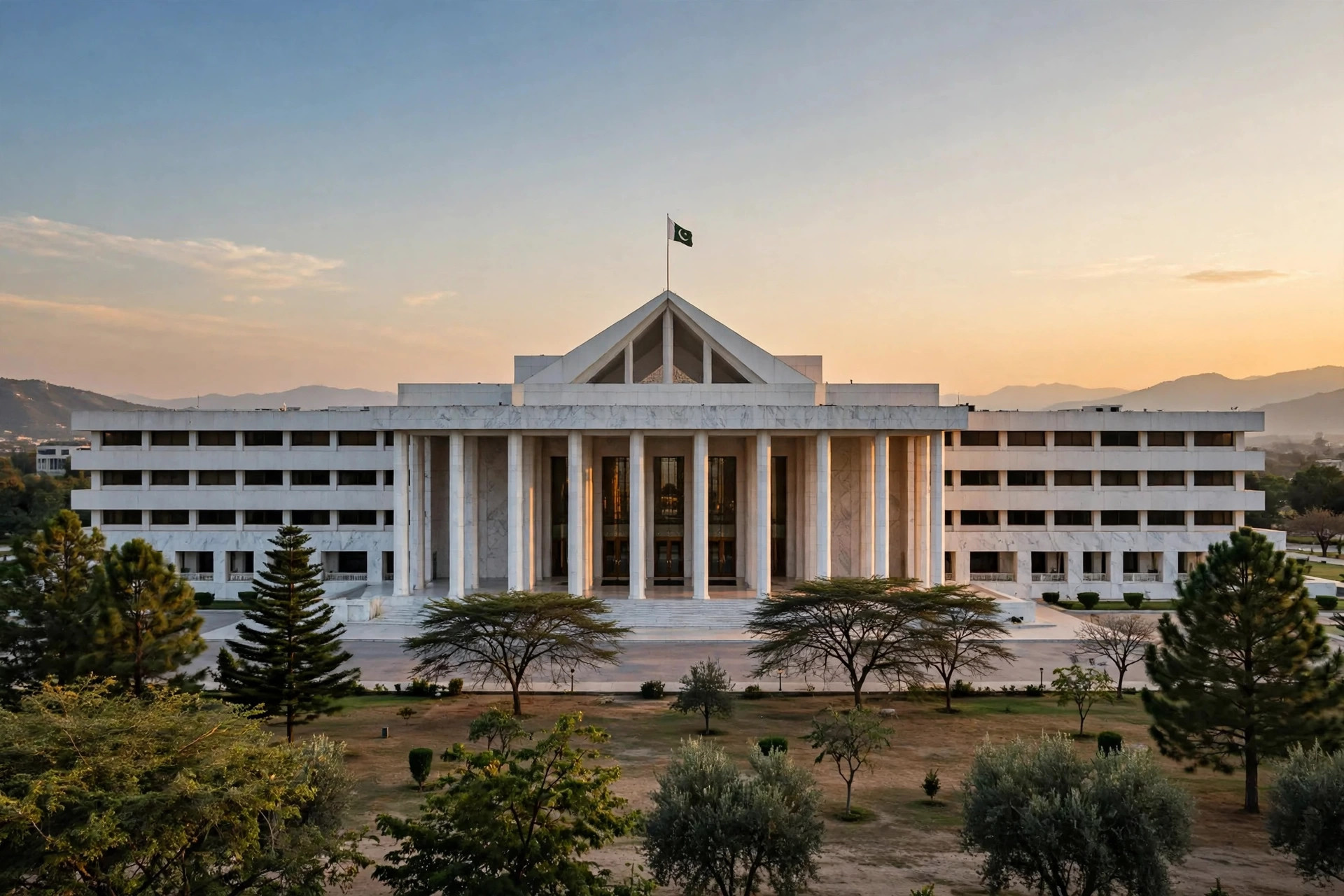
The new provinces referendum debate took a decisive turn on Saturday, as President Asif Ali Zardari and Prime Minister Shehbaz Sharif agreed that any move to create new provinces — including a referendum on the question — must strictly follow the Constitution and cannot bypass Parliament.
The understanding was reached during a meeting between the two leaders at the prime minister's Model Town residence in Lahore, official sources told Dawn. President Zardari was accompanied by former prime minister Raja Pervez Ashraf and Senator Saleem Mandviwalla.
Parliament Cannot Be Bypassed, Leaders Agree
"The majority in parliament will decide whether a referendum is to be held and what its question(s) should be. Without consensus, the matter cannot move an inch. Parliament cannot be bypassed," an official source quoted the meeting as agreeing, according to Dawn.
President Zardari made it clear that the Pakistan Peoples Party's position remains aligned with the Sindh Assembly's resolution opposing the creation of new provinces. He stressed that any move in this direction must strictly follow the procedure prescribed by the Constitution, a position endorsed by Prime Minister Shehbaz Sharif, the sources said.
The discussion came two days after Interior Minister Mohsin Naqvi floated the idea of holding a referendum to gauge public opinion on the creation of new provinces or administrative units, arguing that the exercise could settle the debate once and for all. Ministers pushed back on Friday, and the President's House denied that Mr Naqvi's meeting with President Zardari had discussed new provinces.
New Provinces Referendum: The Constitutional Route
According to PML-N sources quoted by The News, the federal government has already prepared the procedure for holding a referendum under Clause 6 of Article 48 of the Constitution, under which the prime minister can seek Parliament's permission for a referendum on an issue of national importance.
The same sources said approval to hold the referendum would be taken from a joint session of Parliament, and if the government failed to secure a majority there, it could approach the Federal Constitutional Court to determine the referendum's constitutional and legal status.
The proposal on the table, according to those sources, would create 12 provinces — Punjab divided into four, Khyber Pakhtunkhwa and Balochistan into three each, and Sindh into two. A resolution on creating new provinces is expected to be presented in the Balochistan Assembly in the coming weeks, and progress on the issue has been deemed necessary before the Senate elections expected in the first week of March 2027.
Two Accounts That Do Not Match
There is, however, a second account of the same meeting that cannot be reconciled with the first. A senator who was present told The Express Tribune on Saturday that new provinces were not discussed at all, and the prime minister's office statement records only a general discussion of the country's political, economic and security situation.
Daily Pakistan reported that neither the Presidency nor the Prime Minister's Office officially confirmed that new provinces or referendum arrangements were discussed during the meeting. Until the procedure is settled in public, the joint-session route remains a plan described by unnamed sources rather than a decision that exists on paper.
The PML-N has adopted a wait-and-see approach, according to The News. It will closely observe what the PPP and the PTI do: if both parties give their support, the PML-N will also do so, and if the PPP backs out, the PML-N may join the PPP's ranks. A debate within the PTI has also started for and against the creation of smaller provinces, and so far the party has not given a clear indication of supporting the proposed constitutional amendment.
The Constitutional Hurdles
Whatever route is chosen, the Constitution sets a high bar. Article 239(4) requires a two-thirds majority of the total membership of the provincial assembly concerned whenever a constitutional amendment seeks to alter that province's boundaries. Article 48(6), meanwhile, allows a referendum on a matter of national importance through the constitutionally prescribed process.
A referendum alone has no constitutional force to create a province. No referendum rules, draft amendment or timetable have been published, and the only public record of Saturday's discussion remains the prime minister's office statement. For now, the message from Lahore is clear: no referendum, and no new province, without Parliament.
Dawn, 15 Nov 2026; The News, 15 Nov 2026; Daily Pakistan, 15 Nov 2026; Khabarwire, 15 Nov 2026.
Comments
No comments yet. Be the first to share your view.